UPES B.Tech Admissions 2026
Last Date to Apply: 31st July | Ranked #43 among Engineering colleges in India by NIRF | Get Upto 100% Scholarships | Spot Admissions via CUET


JEE Advanced Analysis 2026 - The JEE Advanced 2026 Paper Analysis for Papers 1 and 2 is available on this page. The JEE Advanced 2026 Analysis is based on feedback from students and expert reviews. Aspirants can refer to the analysis to understand the difficulty level, high-weightage topics, paper-wise difficulty, and more. The JEE Advanced 2026 exam is being conducting by IIT Roorkee in online mode. Candidates can access the detailed paper analysis here.
This Story also Contains

The JEE Advanced 2026 exam maintained its reputation for testing conceptual understanding, analytical thinking, and problem-solving abilities. Overall, the paper was rated moderate to difficult, with a balanced mix of conceptual, numerical, and multi-concept questions.
| Subject | Difficulty Level | Analysis |
|---|---|---|
| Physics | Moderate to Difficult | Featured concept-based and numerical problems with a strong emphasis on Mechanics, Electrodynamics, and Modern Physics. Several questions required combining multiple concepts. |
| Chemistry | Moderate | A balanced mix of Physical, Organic, and Inorganic Chemistry. NCERT-based concepts played an important role, especially in Inorganic Chemistry, while Organic questions focused on reaction mechanisms. |
| Mathematics | Difficult | Lengthy and calculation-intensive questions dominated the paper. Calculus, Algebra, and Coordinate Geometry carried significant weight and demanded strong analytical skills. |
| Subject | Difficulty Level | Analysis |
|---|---|---|
| Physics | Difficult | Multi-concept questions from Electricity & Magnetism, Optics, and Thermodynamics required deep conceptual clarity and careful calculations. |
| Chemistry | Moderate to Difficult | Included application-based questions from Organic Chemistry, Coordination Compounds, Electrochemistry, and Chemical Equilibrium. Some questions were statement-based and concept-intensive. |
| Mathematics | Difficult | The toughest section for many candidates due to lengthy calculations and challenging problems from Calculus, Probability, Vectors & 3D Geometry, and Matrices. Time management was crucial. |
Last Date to Apply: 31st July | Ranked #43 among Engineering colleges in India by NIRF | Get Upto 100% Scholarships | Spot Admissions via CUET
Among top 100 Universities Globally in the Times Higher Education (THE) Interdisciplinary Science Rankings 2026
Get expert advice on college selection, admission chances, and career path in a personalized counselling session.
JEE Advanced 2025 was consistent with previous years, where the conceptuality, analytical approach and overall time management were tested in both Paper 1 and Paper 2. Paper 1 had a very standard pattern of question paper with varied types of questions in the paper along with a clear marking scheme. In contrast to this, Paper 2 offered a slightly increased level of difficulty, more so for Physics and Mathematics.
| Aspect | Paper 1 | Paper 2 |
|---|---|---|
| Total Questions | 16 (as per detailed section breakdown) | 48 (16 each from Physics, Chemistry, and Mathematics) |
| Question Types | Single correct, Multiple correct, Numerical, Matching | Single correct, Multiple select, Numerical |
| Difficulty Level | Moderate | Slightly tougher than Paper 1 |
| Most Difficult Subject | Physics | Physics |
| Lengthy Sections | Mathematics, Physics | Mathematics, Physics |
| Easiest Section | Chemistry | Chemistry |
| Out-of-Syllabus Questions | None | None |
| Paragraph-Type Questions | Included (Matching column) | Not included |
Candidates may refer to last year's IIT JEE Advanced analysis below. Being aware of the JEE Advanced previous year paper analysis for both paper 1 and 2 will help candidates prepare better for the exam.
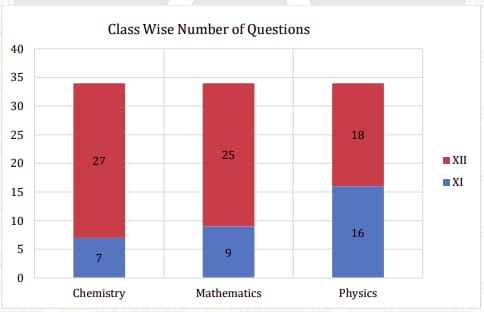
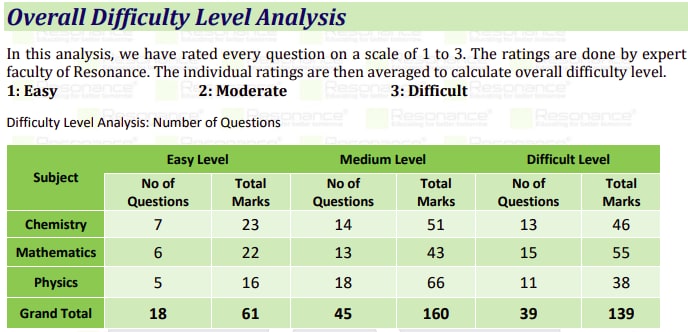
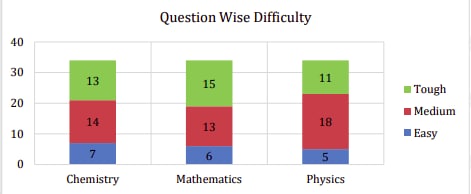
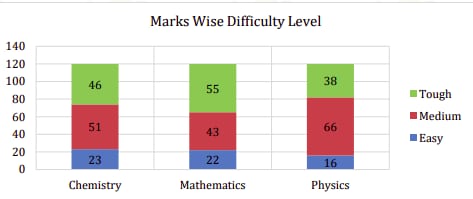
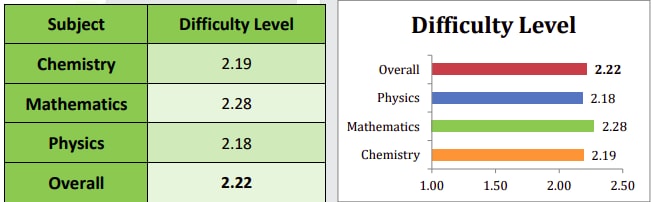
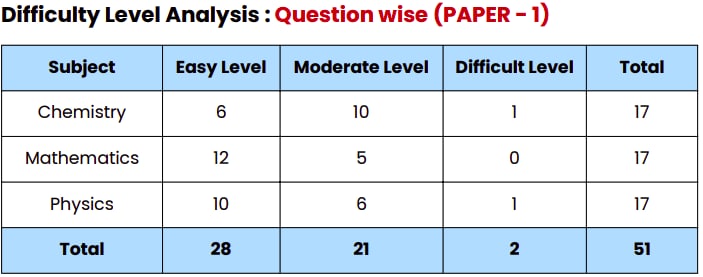
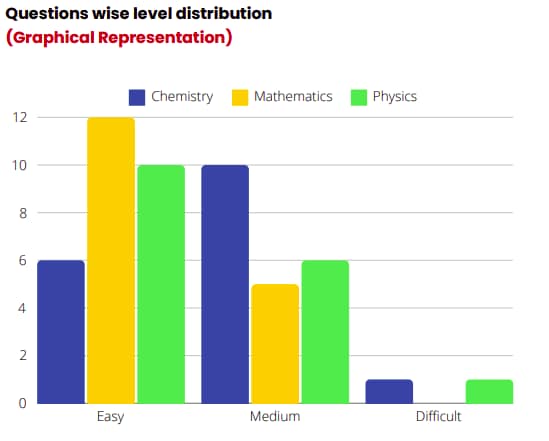
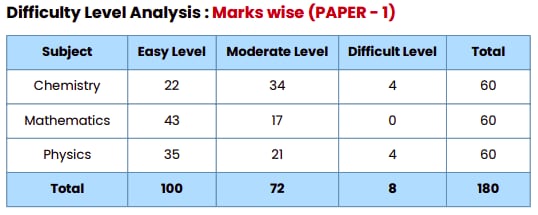
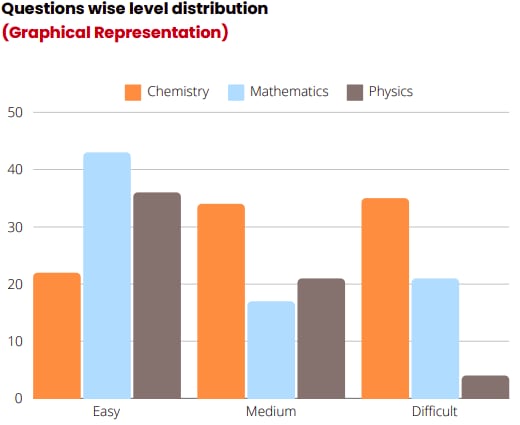
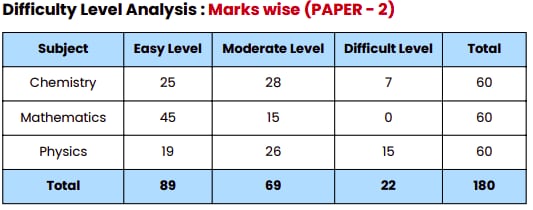
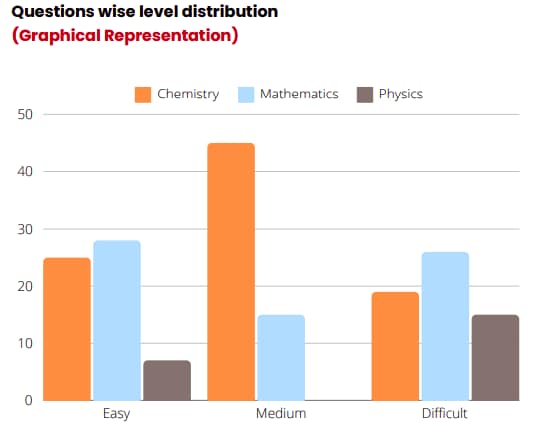
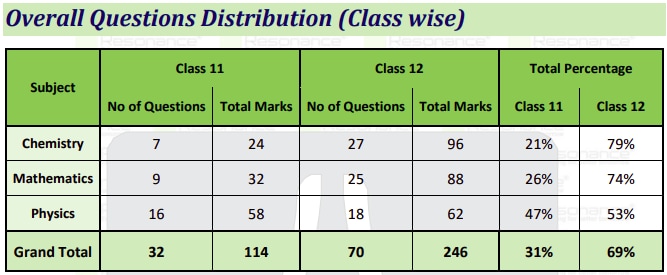
The pattern for JEE Advanced 2024 Paper -1 by Mr Ajay Kumar Sharma, National Academic Director, Engineering, Aakash Educational Services Limited, is as follows:
The paper consists of three subjects: Physics, Chemistry, and Mathematics. Each subject is worth 60 marks, making a total of 180 marks for the paper.
*Section-1: Single Correct Type*
- 4 questions
- Correct answer: +3 marks
- Incorrect answer: -1 mark
*Section-2: Multi-Correct Type*
- 3 questions
- Partial marking is allowed
- Correct option: +4 marks
- Incorrect option: -2 marks
*Section-3: Numerical Value Based*
- 6 questions
- Correct answer: +4 marks
- No penalty for incorrect answers
*Section-4: List Type Questions*
- 4 questions
- Correct answer: +3 marks
- Incorrect answer: -1 mark
The level of the paper was considered as moderate-difficult as per student's feedback. Mathematics & chemistry questions were found difficult and physics questions were found of moderate difficulty.
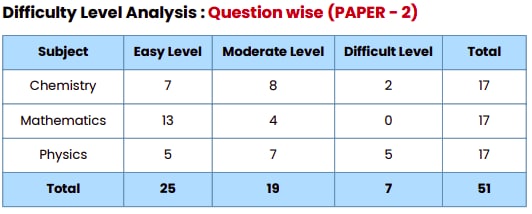
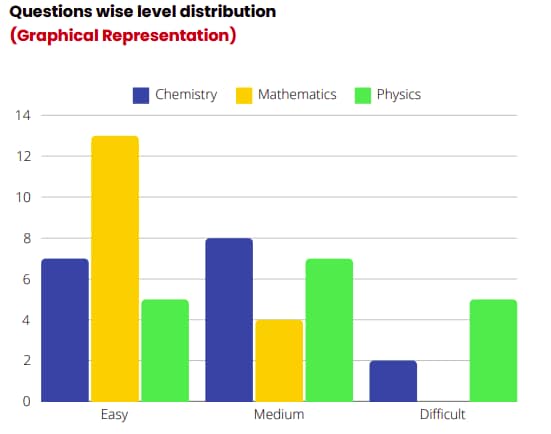
The difficulty level of JEE Advanced 2024 Paper 2 was higher than that of Paper 1. Paper 2 consisted of 51 questions, with 17 questions each in Mathematics, Physics, and Chemistry, amounting to a total of 180 marks. Mathematics was notably tough, Chemistry maintained a moderate level of difficulty, and Physics ranged from moderate to difficult.
|
JEE Advanced exam date |
JEE Advanced question paper |
|
JEE Advanced 2023 June 04 Shift 1 | JEE Advanced 2023 Paper 1 question by Vedantu question |
| JEE Advanced 2023 Paper 1 question by Career Point Kota paper | |
| JEE Advanced 2023 Paper 1 question by Mohit Tyagi | |
|
JEE Advanced 2023 June 04 Shift 2 | JEE Advanced 2023 Paper 2 question by Vendantu |
| JEE Advanced 2023 Paper 2 question by Career Point Kota | |
| JEE Advanced 2023 Paper 2 question by Mohit Tygai |
Candidates can check the JEE Advanced Shift 1 and 2 analysis here. Below is the JEE Main analysis based on the examinees' viewpoint.
The mathematics paper was tough compared to Chemistry and mathematics papers.
JEE Advanced Paper 1 was easy compared to Paper 2.
Questions were based on Matrices in mathematics. Moreover, questions from thermodynamics were asked in physics.
Questions in Physics were based on thermodynamics, modern physics, and optics.
According to Ramesh Batlish, students found the overall level of the paper to be moderate to difficult but not easy. Some students have reported that Physics and Chemistry were Moderate, but Maths was relatively difficult. No mistakes reported till now as the complete paper is yet to be analyzed. The total mark of Paper-2 was 180 which is the same as last year.
|
Subject |
Important topics |
Difficulty level |
|
Chemistry |
Organic & Physical Chemistry, Chemical Kinetics, Ionic & Chemical Equilibrium, Electrochemistry, Thermodynamics, Aryl & Alkyl halides, Amines, Polymers, Biomolecules, Oxygen containing Compounds |
Moderate |
|
Physics |
Wave & Sound, Wave Optics, Fluids, EM Waves, Thermodynamics, Modern Physics, Current Electricity, Kinematics, Gravitation, Electrostatics |
Moderate |
|
Mathematics |
Functions, Differential Equations, Inverse Trigonometric functions, Differentiability, Vectors, 3D Geometry, Application of Derivatives, Complex Numbers, Matrices, Circle Permutation & Combination and Probability |
Tough |
According to the experts of ATP Star Kota, the overall difficulty level of JEE advanced is moderate to difficult. Physics was easy compared to Chemistry and mathematics. Below are the distributions of the difficulty level and weight of questions.
Difficulty level:
|
Subject |
Difficulty level |
|
Physics |
Easy to Moderate |
|
Chemistry |
Moderate to difficult |
|
Mathematics |
Difficult and lengthy |
Weightage of questions:
|
Subject |
Topics |
Weightage of question |
|
Physics |
Heat and Thermodynamics |
4 |
|
Optics |
3 | |
|
Mechanics |
| |
|
Chemistry |
Organic |
7 |
|
Reaction based |
6 | |
|
Physics Chemistry |
5 | |
|
Inorganic |
5 | |
|
Mathematics |
Vector & 3D |
1 |
|
Sequence and Series |
1 | |
|
Trigonometry |
1 | |
|
Calculus |
5 | |
|
Probability |
2 | |
|
Binomial |
2 |
According to the FIITJEE experts and students, the overall level of the paper was moderate to difficult but not easy. Some students have reported Physics was Easy, Chemistry was Moderate, but Maths was relatively difficult.
|
Subjects |
Important Topics |
Difficulty Level |
|
Chemistry |
Chemical Kinetics, Ionic & Chemical Equilibrium, Electrochemistry, Atomic Structure. Thermodynamics (with more than one question). In Organic Chemistry, questions are mostly asked from Amines, Polymers, Biomolecules, Oxygen containing Compounds |
Moderate |
|
Physics |
Kinematics, Thermodynamics, Modern Physics, Capacitors, Current Electricity, Kinematics, Gravitation, Optics, Electrostatics. |
Easy |
|
Maths |
Functions, Matrices, Ellipse, Statistics & Probability. Some good questions were asked from chapters of Probability, Complex Numbers, 3-D Geometry, and Parabola. |
Tricky and lengthy |
Mr Nitin Vijay shared the JEE Advanced 2023 shift 1 and 2 analysis. According to NV sir, Paper I was relatively easier than Paper II, and as a relief to the aspirants, the total number of questions was brought down to 102 as compared to 108 questions asked the previous year for the same total of 360 marks. Where Paper II had a difficult mix of Physical and Organic Chemistry, it also had paragraph-style Integer value questions which were different from those in Paper I. Looking at subject-wise analysis, Mathematics was the most difficult of the 3 subjects with tricky and lengthy questions. Physics was comparatively easy and moderate, with a focus on Kinematics, Thermodynamics, Modern Physics, Capacitors, Current Electricity, Gravitation, Optics, and Electrostatics. Overall, this year’s paper was slightly easier than the previous year's, which is leading to speculations that the cut-off might go higher this year.
Frequently Asked Questions (FAQs)
IIT Delhi will set the JEE Advanced paper in 2027.
The overall difficulty level of JEE Advanced 2026 was Moderate to Difficult. Students with strong conceptual understanding, regular mock test practice, and effective time management were better equipped to perform well.

On Question asked by student community
Hello Aspirant,
Admission to the IIT Preparatory Course depends on several factors such as category-wise seat availability, number of candidates opting for the preparatory programme and counselling trends for the particular year. With an SC Preparatory Rank of 4721, securing a seat may be difficult in highly preferred IITs, but
Hello JEE Aspirant,
Yes, IISER admissions can be offered through the JEE advanced channel, provided you meet the eligibility criteria and have a valid JEE advanced rank. Through this route student are generally considered for the BS-MS dual degree programmes offered by various IISERs.
The available subject may include physics,
Hello Aspirant,
If you were unable to download your JEE Advanced scorecard earlier, first visit the official JEE Advanced website and check whether the result portal is still accessible through your login credentials.
If the scorecard download option is no longer available, immediately contact the JEE Advanced helpdesk and explain
Hey there
If you are preparing for JEE Advanced 2028 and want a good all-in-one book, some popular options are:
Disha Errorless 49 Years JEE Advanced & 25 Years JEE Main PYQ Series – Useful for chapter-wise previous year questions and detailed solutions.
MTG 48 Years JEE Advanced PYQ Series
Hello, admission to a preparatory course in IITs depends on factors such as your category rank, seat availability, and the counselling process. The final allotment is done through the official JoSAA counselling process.
For more information, check here: JEE Advanced Cutoff 2026

Among top 100 Universities Globally in the Times Higher Education (THE) Interdisciplinary Science Rankings 2026
Last Date to Apply: 31st July | Ranked #43 among Engineering colleges in India by NIRF | Get Upto 100% Scholarships | Spot Admissions via CUET
100+ Recruiters | 1200+ Placements of 2026 Batch | NBA & NAAC Accredited | Highest CTC 37 LPA
NAAC A+ Grade | Ranked 503 Globally (QS World University Rankings 2026)
40 LPA Highest Package | Up to 100% Scholarship worth 24 Crore via GUTS exam
UGC Approved | Highest Package: ₹1.2 Crore Offered | 20,000+ Placements | 1,800+ Recruiting Partners | Avail Upto 100% Scholarship