Careers360 Logo
ask-icon
share

    CIEAT Exam 2025: Application Form (Out), Dates, Eligibility, Syllabus, Pattern, Admit Card, Result, Cutoff

    author
    Samridhi MishraUpdated on Jan 29, 2026 05:57 PM

    About CIEAT 2026

    CIEAT 2025 - Crescent Institute of Science and Technology is conducting the CIEAT 2025 phase 3 registrations on the official website. The link for the CIEAT 2025 applications 2025 is available through login at crescent.education. The CIEAT 2025 phase 3 exam date has been announced as June 2, 2025. Candidates who wish to appear for the CIEAT 2025 exam must apply online before the last date. The CIEAT 2025 exam will be conducted as an online proctored test for 2 hours. Admission to the Crescent Institute of Science and Technology is based on the CIEAT exam 2025 and the JEE Mains exam.

    The authority conducted the CIEAT 2025 phase 1 exam on April 26, 2025. The CIEAT 2025 exam date for Phase 2 is May 22, 2025. The application process of CIEAT 2025 comprises registration, filling application form, uploading documents, and payment of fee. To fill CIEAT application form, applicants must have passed the 10+2 or equivalent exam conducted by the State Board / CBSE / ICSE / ISC with a minimum aggregate of 50% marks in Mathematics, Physics, and Chemistry. Applicants appearing for class 12 are also eligible to fill out the application form. Candidates appearing for the exam must refer to the CIEAT syllabus and exam pattern for their preparations. Applicants can also go through the CIEAT sample paper and previous year question papers to check important topics asked in the exam previously.

    CIEAT 2025 Latest News and Updates

    Candidates can check all the latest information regarding the CIEAT exam 2025 below after the official release.

    • CIEAT phase 3 exam date announced.
    • CIEAT 2025 phase 2 registration and exam concluded
    • CIEAT 2025 phase 1 exam concluded.
    • CIEAT application for phase 2 commenced. Phase 2 exam date announced.
    • CIEAT BTech 2025 exam date announced.
    • Crescent Institute Engineering Admission Test (CIEAT 2025) registration started.

    Crescent Institute of Science and Technology releases the CIEAT 2025 admit card online on the official website. Candidates who complete the registration before the last date get to download the CIEAT admit card. To download the CIEAT admit card candidates have to provide the login credentials such as application number and password. The CIEAT admit card comprises the login details and roll number of the candidate.

    After the conclusion of the exam, the exam authorities release the CIEAT result 2025 on the official website. Following the result of CIEAT 2025, the authority will prepare separate merit lists for CIEAT and JEE Main qualified candidates. The authority will conduct the CIEAT counselling for admission to the university. Candidates who will be listed in the CIEAT 2025 merit list will be eligible for admission to the institute.

    Read More
    CIEAT Exam 2025: Application Form (Out), Dates, Eligibility, Syllabus, Pattern, Admit Card, Result, Cutoff
    CIEAT Exam 2025: Application Form (Out), Dates, Eligibility, Syllabus, Pattern, Admit Card, Result, Cutoff

    CIEAT 2026 Highlights

    Full Exam Name
    Crescent Institute Engineering Admission Test
    Short Exam Name
    CIEAT
    Conducting Body
    B.S. Abdur Rahman Crescent Institute of Science and Technology
    Frequency Of Conduct
    Once a year
    Exam Level
    University Level Exam
    Languages
    English
    Mode Of Application
    offline +1 more
    Application Fee
    Online : 1000
    Mode Of Exam
    online
    Mode Of Counselling
    offline
    Participating Colleges
    1
    Exam Duration
    2 Hours
    No Of Seats
    990

    CIEAT Important Dates

    CIEAT Crescent Institute Engineering Admission Test (session 2026)

    The authority has released the CIEAT 2025 eligibility criteria along with the official notification. The eligibility criteria of CIEAT 2025 comprise age limit, qualifying exam, minimum percentage and more. Applicants must check the CIEAT 2025 eligibility criteria before filling out the application form. For more details about CIEAT eligibility criteria, candidates can check the information below.

    • Age Limit: To be eligible for CIEAT, the date of birth should be between January 2003 and December 2008.

    • Regular Study: Candidates should have acquired Regular, full time and formal education to be considered eligible for CIEAT.

    • Qualifying Exam: Candidates should have passed 10+2 or equivalent exams conducted by the State Board / CBSE / ICSE with a minimum aggregate of 50% marks in Mathematics, Physics, and Chemistry. However, for Biotechnology and Cancer Biotechnology programmes, minimum aggregate marks in Mathematics / Biology, Physics and Chemistry are required.

    • Candidates appearing for the 10+2 exam in 2025 are also eligible to apply.

    • Entrance Exam: Candidates will have to appear in the CIEAT entrance exam or JEE Main for admission.

    Background wave

    The authority is conducting the CIEAT 2025 phase 3 registrations on the official website, crescent.education. The CIEAT application process comprises of registration, form filling, and payment of the CIEAT registration fee. Candidates must check the CIEAT eligibility criteria 2025 before applying. Below are the steps to fill out the CIEAT application form.
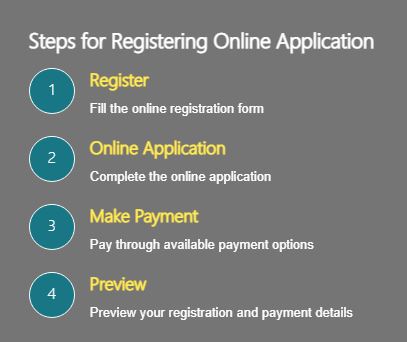
    Steps to fill CIEAT 2025 Application Form

    CIEAT application form 2025 includes the following steps:

    Step 1- Filling of Personal Details: Candidates have to fill in their full name, gender, date of birth, address, mobile number, email Id, etc with three preferences of B.Tech programmes.

    Step 2 – Providing Qualification Details & Uploading Photograph: Candidates had to provide their qualification exam details like year and month of passing, registration number, marks obtained etc. They also had to upload their recent passport-size color photograph in the dimensions specified officially.


     Dimensions        


    Format                        


    Size

            
    30 mm x 45 mm        .jp or .jpeg        Maximum             80 KB        

    Step 3 – Payment of Fees: After uploading the photograph, candidates have to pay the application fee of Rs 1000 in online mode through various acceptable modes of payment.

    Step 4 – Preview and Submission: Candidates have to agree to the declaration given and check the preview of the form filled. Once satisfied, candidates had to submit it.

    Documents Required at Exam CIEAT 2026

    Crescent Institute Engineering Admission Test 2026

    Admit card

    The authority has released the CIEAT 2025 exam pattern online. Candidates must check the exam pattern of CIEAT 2025 to know the format of the paper. CIEAT exam pattern 2025 comprises the marking scheme, duration of questions, types of questions, and sections. The authority will conduct the CIEAT exam in online mode for 2 hours. There will be a total of 100 questions. There are no negative markings for wrong attempts. Along with the exam pattern, candidates can also refer to the CIEAT syllabus for their preparations. 

    CIEAT Exam Pattern 2025

    Particulars

    Details

    Mode  of exam

    Online

    Total number of questions

    100

    Number of questions section wise

    Physics: 25
    Chemistry: 25
    Mathematics: 50

    Time duration of the exam

    2  hours

    Total marks

    100

    Marking  scheme

    1  mark for every correct answer

    Recommended Exams

    Other Engineering Exams

    Manav Rachna National Aptitude Test
    NAAC A++ Grade | Recognized as Category-1 Deemed to be University by UGC | 41,000 + Alumni Imprints Globally
    Amrita Entrance Examination - Engineering
    Application Deadline: 15th April | Recognized as Institute of Eminence by Govt. of India | NAAC ‘A++’ Grade | Upto 75% Scholarships
    University of Petroleum & Energy Studies Engineering Aptitude Test
    Last Date to Apply: 26th March | Ranked #43 among Engineering colleges in India by NIRF | Highest Package 1.3 CR , 100% Placements

    CIEAT 2026 Syllabus

    CIEAT Crescent Institute Engineering Admission Test Syllabus

    Mathematics: Unit 01


    Applications of matrices and determinants
    • Inverse of a non-singular square matrix, adjoint of a square matrix, definition of inverse matrix of a square matrix, properties of inverses of matrices, application of matrices to geometry, elementary transformations of a matrix
    • Elementary row and column operations, row-echelon form, rank of a matrix, applications of matrices: Solving system of linear equations, formation of a system of linear equations, System of linear equations in matrix form
    • Solution to a system of linear equations

    Mathematics: Unit 02


    Complex numbers
    • Powers of imaginary unit, complex numbers, rectangular form, Argand plane, algebraic operations on complex number, basic algebraic properties of complex numbers, properties of complex numbers
    • Conjugate of a complex number geometrical representation of conjugate of a complex number, properties of complex conjugates, modulus of a complex number, properties of modulus of a complex number, square roots of a complex number
    • Geometry and locus of complex numbers

    Mathematics: Unit 03


    Theory of equations
    • Basics of polynomial equations, different types of polynomial equations, quadratic equations, Vieta's formulae and formation of polynomial equations, Vieta's formula for quadratic equations, Vieta's formula for polynomial equations
    • Nature of roots and nature of coefficients of polynomial equations, imaginary roots, irrational roots, rational roots, roots of higher degree polynomial equations, polynomials with additional information, imaginary or surds roots
    • Polynomial equations with even powers only, zero sum of all coefficients, equal sums of coefficients of odd and even powers, polynomial equations with no additional information, reciprocal equations, descartes rule, statement of descartes rule
    • Attainment of bounds

    Mathematics: Unit 04


    Inverse trigonometric functions
    • Domain and range of trigonometric functions, graphs of functions, amplitude and period of a graph, inverse functions, graphs of inverse functions, sine function and inverse sine function, properties of the sine function
    • The inverse sine function and its properties, the cosine function and inverse cosine function, properties of the cosine function, the inverse cosine function and its properties, the tangent function and the inverse tangent function
    • Properties of the tangent function, the inverse tangent function and its properties, the cosecant function and the inverse cosecant function, the inverse cosecant function, the secant function and inverse secant function, inverse secant function
    • The cotangent function and the inverse cotangent function, inverse cotangent function, principal value of inverse trigonometric functions

    Mathematics: Unit 05


    Two-dimensional analytical geometry
    • Circle, equation of a circle in standard form, equations of tangent and normal at a point P on a given circle, conics-the general equation of a conic, parabola, ellipse, hyperbola, conic sections, geometric description of conic section, degenerate forms
    • Degenerate forms, parametric form of conics, parametric equations, tangents and normals to conics, real-life applications of conic, parabola, ellipse, hyperbola, reflective property of parabola, reflective property of ellipse

    Mathematics: Unit 06


    Applications of vector algebra
    • Scalar product and vector product, geometrical interpretation, scalar triple product, properties of the scalar triple product, vector triple product, Jacobi's identity and Lagrange's identity, application of vectors to 3D geometry
    • Different forms of equation of a plane

    Mathematics: Unit 07


    Applications of differential calculus
    • Derivative, indeterminate forms applications of first derivative, monotonicity of functions, absolute maxima and minima, relative extrema on an interval, extrema using first derivative test, concavity, convexity, and points of inflection
    • Extrema using second derivative test

    Mathematics: Unit 08


    Applications of integration
    • Improper integrals, reduction formulae, gamma integral, evaluation of bounded plane area by integration, area of the region bounded by a curve, x-axis and the lines x = a and x = b
    • Area of the region bounded by a curve, y-axis and the lines y = c and y = d
    • Area of the region bounded between two curves

    Mathematics: Unit 09


    Ordinary differential equations
    • Differential equation, order, and degree, formation of differential equations, formation of differential equations from physical situations, solution of ordinary differential equations, solution of first order and first-degree differential equations
    • Variables separable method, homogeneous form or homogeneous differential equation, first order linear differential equations, applications of first order ordinary differential equations

    Mathematics: Unit 10


    Probability distributions
    • Random variable, types of random variable, discrete random variables, probability mass function, cumulative distribution function or distribution function, cumulative distribution function from probability mass function,
    • Probability mass function from cumulative distribution function, continuous distributions, the definition of continuous random variable, probability density function, distribution function, distribution function from probability density function
    • Probability density function from probability distribution function

    Mathematics: Unit 11


    Discrete mathematics
    • Binary operations, definitions, some more properties of a binary operation, some binary operations on boolean matrices, modular arithmetic, mathematical logic, statement and its truth value, compound statements, logical connectives and truth tables
    • Tautology, contradiction, and contingency, duality, logical equivalence

    Physics: Unit 01


    Electrostatics
    • Coulomb's law, electric field, electric dipole, electric field due to a dipole, electrostatic potential and potential energy, electrostatic potential energy & electrostatic potential, electric flux, gauss law, capacitors
    • Distribution of charges in a conductor

    Physics: Unit 02


    Current electricity
    • Electric current, Ohm's law, resistivity, energy and power in electrical circuits, Kirchhoff's first rule, Kirchhoff's second rule, Wheatstone’s bridge, metre bridge, thermoelectric current, seebeck effect, Peltier effect, Thomson effect

    Physics: Unit 03


    Magnetism and magnetic effects of electric current
    • Coulomb's inverse square law of magnetism, Biot-Savart law, ampere circuital law, Lorentz force, force on a moving charge in a magnetic, moving coil galvanometer

    Physics: Unit 04


    Electromagnetic induction and alternating current
    • Electromagnetic induction, magnetic fLux, Fleming's right-hand rule, self-induction, methods of producing induced EMF, transformer, construction and working of transformer, energy losses in transformer, alternating current-Q-factor, power in AC circuits

    Physics: Unit 05


    Electromagnetic waves
    • Displacement current and MaxweLL's correction to ampere’s circuital law, electromagnetic waves, electromagnetic spectrum, types of spectrum emission and absorption spectrum

    Physics: Unit 06


    Ray optics
    • Reflection, spherical mirrors, speed of light, refractive index, optical path, refraction, refraction at single spherical surface, thin lens, prism, scattering of sunlight

    Physics: Unit 07


    Wave optics
    • Theories on light, quantum theory, wave nature of light, interference, diffraction, resolutions, Malus law, Brewster's law, optical instruments

    Physics: Unit 08


    Dual nature of radiation and matter
    • Electron emission, photoelectric effect, HERTZ, Hallwach and Lenard's observation, matter waves, De-Broglie wavelength, electron microscope, X-ray spectra

    Physics: Unit 09


    Atomic and nuclear physics
    • Electric discharge through gases, properties of cathode rays, Rutherford model, Bohr atom model, atomic structure, atomic and nuclear masses, nuclear force, half-life, mean life, carbon dating, nuclear fission, nuclear fusion

    Physics: Unit 10


    Electronics and communication systems
    • Energy band diagram, types of semiconductors, PN junction formation, PN junction diode, Zener diode, the bipolar junction transistor, digital electronics, Boolean algebra, De Morgan's theorem, integrated chips, communication system, modulation

    Chemistry: Unit 01


    Metallurgy
    • Occurrence of metals, mineral and ore, concentration of ores, extraction of crude metal, refining process

    Chemistry: Unit 02


    P-block elements
    • General trends in properties of p-block elements, group 13 (boron group) elements, group 14 (carbon group) elements, silicones, group 15 elements, oxoacids of phosphorus-structure, group 16 (oxygen group) elements, occurrence, physical properties
    • Group 17 (halogen group) elements, group 18 (inert gases) elements

    Chemistry: Unit 03


    Transition and inner transition elements
    • Position of d-block elements in the periodic table, electronic configuration, general trend in properties, f-block elements, inner transition elements, the position of lanthanoids in the periodic table
    • Actinoids: Th, Pa, U, Np, Pu, Am, Cm, Bk, Cf, Es, Fm, Md, No, Lr

    Chemistry: Unit 04


    Coordination chemistry
    • Coordination compounds and double salts, Werner's theory of coordination compounds postulates Werner's theory, definition of important terms pertaining to coordination compounds, Types of complexes, nomenclature of coordination compounds
    • Theories of coordination compound

    Chemistry: Unit 05


    Solid-state
    • Classification of solids, classification of crystalline solids, crystal lattice and unit cell, primitive and non-primitive unit cell, packing in crystals, imperfections in solids

    Chemistry: Unit 06


    Chemical kinetics
    • Rate of chemical reaction, rate law and rate constant, molecularity, integrated rate equation, half-life period of a reaction, Arrhenius equation

    Chemistry: Unit 07


    Ionic equilibrium
    • Acids and bases, strength of acids and bases, ionisation of water, the pH scale, common ion effect, buffer solution, solubility product

    Chemistry: Unit 08


    Electrochemistry
    • Conductivity of electrolytic solution, variation of molar conductivity with concentration, thermodynamics of cell reactions
    • Nernst equation, electrolytic cell and electrolysis, Faraday's law of electrolysis first law, second law, electrochemical series

    Chemistry: Unit 09


    Surface chemistry
    • Adsorption and absorption characteristics of adsorption, physical and chemical adsorption, catalysis positive and negative catalysis, colloid, dispersion phase and dispersion medium, preparation of colloids

    Chemistry: Unit 10


    Hydroxy compounds and ethers
    • IUPAC nomenclature, physical properties of alcohols, preparation of alcohols, physical properties of phenol, chemical properties of phenols, test to differentiate, alcohols and phenols, ethers, classification IUPAC system structure of functional group
    • Preparation of ethers, physical properties, chemical properties

    Chemistry: Unit 11


    Carbonyl compounds and carboxylic acids
    • Nomenclature of aldehyde and ketones, structure of carbonyl group, general methods of preparation of aldehydes and ketones-physical properties, chemical properties,
    • Carboxylic acids-nomenclature, structure of carboxyl group, methods of preparation, physical properties, chemical properties

    Chemistry: Unit 12


    Organic nitrogen compounds
    • Classification of nitro compounds-nomenclature, isomerism, preparation of nitroaLkanes, physical and chemical properties of nitro alkanes, amines, classification nomenclature IUPAC system of amines, structure
    • General methods of preparation of amines physical and chemical properties

    Chemistry: Unit 13


    Biomolecules
    • Carbohydrate, classification, glucose, fructose, disaccharides, proteins amino acids, nucleic acids

    Biology: Unit 01


    Asexual and sexual reproduction in plants
    • Asexual reproduction, pre-fertilization structure and events, androecium, gynoecium, pollination, apomixis, polyembryony, parthenocarpy

    Biology: Unit 02


    Classical genetics
    • Heredity and variation, monohybrid cross, intragenic interactions, intergenic interactions

    Biology: Unit 03


    Chromosomal basis of inheritance
    • Comparison between gene and chromosome behaviour, linkage, crossing over, multiple allele, types of mutation, chromosomal mutations

    Biology: Unit 04


    Principles and processes of biotechnology
    • Fermentation, advancements in modern biotechnology, tools for genetic engineering, methods of gene transfer, screening for recombinants, herbicide tolerant, insect resistance, Bt crops, polyhydroxybutyrate (PHB), bioremediation, bioprospecting

    Biology: Unit 05


    Plant tissue culture
    • Introduction, techniques involved in PTC, types of plant tissue culture, meristem culture applications of plant tissue culture, cryopreservation

    Biology: Unit 06


    Principles of ecology
    • Definitions of ecology, ecological hierarchy, habitat and niche, ecological equivalents, edaphic factors, topographic factors, biotic factors, interspecific interactions, ecological adaptations, hydrophytes, xerophytes mesophytes

    Biology: Unit 07


    Ecosystem
    • Photosynthetically active radiation, energy flow, food chain, food web, ecological pyramids, biogeochemical cycle, carbon cycle and phosphate cycle, types of ecosystems, plant succession, ecological succession

    Biology: Unit 08


    Environmental issues
    • Greenhouse effect and global warming and ozone depletion, forestry, deforestation, afforestation, alien species, carbon capture and storage, environmental impact assessment
    • Pollution, biomagnification, eutrophication, organic farming and its implementation, solid waste management

    Biology: Unit 09


    Reproduction in organisms
    • Mode of reproduction, sexual reproduction, human reproductive system, gametogenesis, fertilization and implantation, maintenance of pregnancy and embryonic development, need for reproductive health problems and strategies
    • Amniocentesis and its statutory ban, population explosion and birth control

    Biology: Unit 10


    Principles of inheritance and variation
    • Multiple alleles, human blood groups, genetic control of Rh factor, sex determination, sex-linked inheritance, karyotyping, pedigree analysis

    Biology: Unit 11


    Molecular genetics
    • Gene as the functional unit of inheritance, DNA is the genetic material, RNA-world, properties of genetic material, packaging of DNA helix, transcription, genetic code, translation regulation of gene expression

    Biology: Unit 12


    Evolution
    • Origin of life, geological time scale, biological evolution, theories of biological evolution, Hardy-Weinberg principle

    Biology: Unit 13


    Human health and diseases
    • Common diseases in human beings, maintenance of personal and public hygiene, basic concepts of immunology, adolescence-drug and alcohol abuse, mental health and depression

    Biology: Unit 14


    Microbes in human welfare
    • Microbes in industrial products, microbes in sewage treatment, bioremediation

    Biology: Unit 15


    Applications of biotechnology
    • Applications in medicine, gene therapy, stem cell therapy, molecular diagnostics

    Biology: Unit 16


    Organisms and populations
    • Organisms and its environment, major abiotic components or factors, populations, population attributes, population interaction

    Biology: Unit 17


    Biodiversity and its conservation
    • Biodiversity, importance of biodiversity, global and india, causes of biodiversity loss

    Applicants can download the CIEAT 2025 admit card in online mode. The authority releases the admit card of CIEAT 2025 online at the official website. Candidates have to provide the application number and password to download the CIEAT admit card. The admit card comprises candidate details and the login ID and password for the exam. In case of any discrepancy in the admit card of CIEAT, candidates must contact the exam authority for corrections before the exam. The steps to download the CIEAT admit card are given below. 

    How to download the CIEAT admit card 2025?

    • Visit the CIEAT 2025 official website.

    • Click on the direct link to download the admit card.

    • Enter the login credentials in the required fields.

    • Check all the details mentioned in the CIEAT admit card.

    • Download the admit card for future reference.

    Crescent Institutes of Science and Technology will declare the CIEAT 2025 result online on its official website. Candidates will have to provide the login credentials to check the CIEAT result 2025 online. The result of CIEAT will comprise of ranks and scores obtained by the candidates. On the basis of ranks secured, the authorities prepare a merit list which will be used further for the admission process.

    There will be two separate merit lists – one for CIEAT applicants and another for candidates who have applied on the basis of their JEE Main result.

    How to check CIEAT 2025 result?

    • Visit the CIEAT official website. 

    • Click on the result link of CIEAT.

    • Enter the application number and date of birth.

    • The  CIEAT result will appear on the screen.

    • Check and download it.

    • Download the CIEAT scorecard and result for future reference.

    CIEAT counselling 2025 will be conducted by the institute on the basis of entrance exam results and merit list. The qualified candidates will be invited for CIEAT counselling as per their ranks in the merit list. Candidates will have to be present physically at the time of CIEAT 2025 counselling along with their original documents and fees to be paid in case of seat allotment.

    Documents Required at CIEAT 2026 counselling

    Crescent Institute Engineering Admission Test 2026

    Counselling call letter
    Class 10 marksheet and certificate
    Class 12 marksheet and certificate
    CIEAT or JEE Main result

    Candidates will be selected for admission based on their scores in the 10+2 or equivalent exam and marks scored in the CIEAT entrance exam. Candidates who have valid scores in JEE Main will be directly selected for admission.

    General Information

    Contact Number:

    04422751347 + 2 more

    Relevant Links:

    Official Website Link Click Here
    UPES B.Tech Admissions 2026

    Last Date to Apply: 26th March | Ranked #43 among Engineering colleges in India by NIRF | Highest Package 1.3 CR , 100% Placements

    Amrita University B.Tech 2026

    Application Deadline: 15th April | Recognized as Institute of Eminence by Govt. of India | NAAC ‘A++’ Grade | Upto 75% Scholarships

    Frequently Asked Questions (FAQs)

    Q: When will the CIEAT application form 2025 be released?
    A:

    The CIEAT 2025 application form for phase 2 is available on the official website- crescent.education

    Q: What is the mode of CIEAT 2025 exam?
    A:

    The authority conducts the CIEAT 2025 as an online proctored test.

    Q: What is the CIEAT 2025 exam date?
    A:

    CIEAT 2025 exam date is April 26, 2025.

    Q: What is the eligibility criteria of CIEAT 2025?
    A:

    As per CIEAT eligibility criteria, candidates should have passed the 12th standard exam conducted by the State Board / CBSE / ISC or equivalent exam with a minimum aggregate of 50% marks in Mathematics, Physics and Chemistry.

    Q: What is the age limit for appearing in CIEAT 2025?
    A:

    The candidate's date of birth should be between January 2003 and December 2008.

    Articles
    |
    Upcoming Engineering Exams

    Questions related to CIEAT

    On Question asked by student community

    Have a question related to CIEAT ?

    Hello,

    1 Research: Check the official website for exam details.

    2 Eligibility: Ensure you meet the criteria.

    3 Apply: Fill out the application form by the deadline.

    4 Prepare: Study relevant subjects and topics.

    5 Admit Card: Collect it before the exam.

    6 Appear: Take the exam on the scheduled

    Correct Answer: Dahi Handi


    Solution : The correct option is Dahi Handi.

    In October 2022, Maharashtra formally designated Dahi Handi as an adventure sport, although it is not yet classified as a mainstream sport by the Sports Authority of India. This recognition underscores its cultural importance and encourages athleticism

    Hello aspirant,

    Hope you are doing absolutely great.

    So with regard to your query, NO there is no phase 3 session for the CIEAT 2022 exam. It only has 2 phases, Phase 1 is conducted on 5 March 2022 and whereas Phase 2 is conducted on 18 June 2022. The

    Student Community: Where Questions Find Answers

    Ask and get expert answers on exams, counselling, admissions, careers, and study options.