
Search Colleges, Exams, Schools & more


Login
JEE Main Changes in Syllabus 2027 - What’s New & Removed Topics This Year?
JEE Main Changes in Syllabus 2027- The National Testing Agency will release the JEE Main 2027 syllabus along with the official notification. Any JEE Main 2027 changes in syllabus will be mentioned in the PDF. The same will be updated in this page. Note that no changes in JEE syllabus were observed in 2026. Candidates will be able to access the JEE Main syllabus details below. The paper will be based on topics from Class 11th and 12th Physics, Chemistry, and Mathematics. The JEE Main 2027 exam is scheduled on January 22, 23, 24, 28, 29 & 30, 2027, for session 1.
Live | Oct 19, 2026 | 8:01 PM IST
This Story also Contains
- JEE Main Changes in Syllabus 2027
- JEE Main 2027 Syllabus - Subject Wise Topics
- Previous Year Changes in JEE Main Syllabus 2027
JEE Main Changes in Syllabus 2027
NTA will upload the JEE Main syllabus 2027 PDF in October 2026. If at all there are any changes in the JEE Mains 2027 syllabus, it will be mentioned therein. The same section wise comparison will be provided on this page as well. Until then, check the subject-wise topics based on last year’s brochure.
Confused About College Admissions?
Get expert advice on college selection, admission chances, and career path in a personalized counselling session.
Book a Counselling Slot
Select Date
Pick a Slot
JEE Main 2027 Syllabus - Subject Wise Topics
The authority will hold the exam for three different subjects: physics, maths and chemistry. Each section will have 25 questions. Of these, 20 will be MCQs and remaining 5 will be numerical types. Check the JEE Main syllabus topics as per last year data.
JEE Main 2027 Physics Syllabus
Unit Name | Topics and Subtopics |
Kinematics | The frame of reference, motion in a straight line, speed and velocity, uniformand non-uniform motion, average speed and instantaneous velocity, uniformlyaccelerated motion, velocity-time, position-time graph, relations for uniformlyaccelerated motion, relative velocity. Motion in a plane, projectile motion, uniform circular motion. |
Laws of Motion | Force and inertia, Newton’s first law of motion, momentum, Newton’s secondLaw of motion, impulse, Newton’s third Law of motion. Law of conservation of linear momentum and its applications, equilibrium of concurrent forces. Static and Kinetic friction, laws of friction, rolling friction. Dynamics of uniform circular motion, centripetal force and its applications: vehicle on a level circular road, vehicle on a banked road. |
Work, Energy and Power | Work done by a constant force and a variable force, kinetic and potential energies, work-energy theorem, power. The potential energy of a spring, conservation of mechanical energy, conservative and non- conservative forces, motion in a vertical circle. Elastic and inelastic collisions in one and two dimensions |
Units and Measurements | Units of measurements, System of units, SI Units, fundamental and derived units, least count, significant figures, Errors in measurements. Dimensions of Physics quantities, dimensional analysis and its applications. |
Gravitation | The universal law of gravitation. Acceleration due to gravity and its variationwith altitude and depth. Kepler’slaw of planetary motion. Gravitational potential energy, gravitational potential. Escape velocity, motion of a satellite, orbital velocity, time period and energy of satellite. |
Properties of Solids and Liquids | Elastic behaviour, stress-strain relationship, Hooke's Law, Young's modulus, bulk modulus and modulus of rigidity. Syllabus for JEE (Main) - 2026 Pressure due to a fluid column, Pascal's law and its applications, effect of gravityon fluid pressure, viscosity, Stoke’s law, terminal velocity, streamline andturbulent flow, critical velocity, Bernoulli's principle and its applications. Surface energy and surface tension, angle of contact, excess of pressure across a curved surface, application of surface tension: drops, bubbles and capillary rise. Heat, temperature, thermal expansion, specific heat capacity, calorimetry, change of state, latent heat. Heat transfer: conduction, convection and radiation. |
Current Electricity | Electric current: drift velocity, mobility and their relation with electric current, Ohm's law, electrical resistance, I-V characteristics of Ohmic and non-ohmic conductors, electrical energy and power, electrical resistivity and conductivity, series and parallel combinations of resistors, temperature dependence of resistance. Internal resistance, potential difference and emf of a cell, a combination of cells in series and parallel. Kirchhoff’s laws and their applications, Wheatstone bridge, Metre Bridge. |
Thermodynamics | Thermal equilibrium and the concept of temperature, zeroth lawof thermodynamics, heat, work and internal energy. The first lawof thermodynamics, isothermal and adiabatic processes. The second lawof thermodynamics: reversible and irreversible processes. |
Rotational Motion | Centre of mass of a two-particle system, centre of mass of a rigid body. Basic concepts of rotational motion, moment of a force, torque, angular momentum, conservation of angular momentum and its applications. The moment of inertia, the radius of gyration, values of moments of inertia for simple geometrical objects, parallel and perpendicular axes theorems and their applications. Equilibrium of rigid bodies, rigid body rotation and equations of rotational motion, comparison of linear and rotational motions. |
Kinetic Theory of Gases | Equation of state of a perfect gas, work done on compressing a gas, kinetic theory of gases: assumptions, the concept of pressure, kinetic interpretation of temperature, RMS speed of gas molecules, degrees of freedom, lawof equipartition of energy and applications to specific heat capacities of gases, mean free path, Avogadro's number. |
Electrostatics | Electric charges: conservation of charge, Coulomb's law forces between twopoint charges, forces between multiple charges, superposition principle andcontinuous charge distribution. Electric field: electric field due to a point charge, electric field lines, electric dipole, electric field due to a dipole, torque on a dipole in a uniformelectric field. Electric flux, Gauss's law and its applications to find field due to infinitely longuniformly charged straight wire, uniformly charged infinite plane sheet anduniformly charged thin spherical shell. Electric potential and its calculation for a point charge, electric dipole andsystem of charges, potential difference, equipotential surfaces, electrical potential energy of a system of two point charges and of electric dipole in anelectrostatic field. Conductors and insulators, dielectrics and electric polarization, capacitors andcapacitance, the combination of capacitors in series and parallel and capacitance of a parallel plate capacitor with and without dielectric medium between the plates, energy stored in a capacitor. |
Oscillations and Waves | Oscillations and periodic motion: time period, frequency, displacement as a function of time, periodic functions. Simple harmonic motion (S.H.M.) and its equation, phase, oscillations of a spring: restoring force and force constant, energy in S.H.M.: kinetic and potential energies, simple pendulum: derivationof expression for its time period. Wave motion, longitudinal and transverse waves, speed of the travelling wave, displacement relation for a progressive wave, principle of superposition of waves, reflection of waves, standing waves in strings and organ pipes, fundamental mode and harmonics, beats. |
Electromagnetic Induction & AC | Electromagnetic induction: Faraday's law, induced emf and current, Lenz’s law, eddy currents, self and mutual inductance. Alternating currents, peak and RMS value of alternating current/voltage, reactance and impedance, LCR series circuit, resonance, power in AC circuits, wattless current, AC generator and transformer. |
Electronic Devices | Semiconductors, semiconductor diode: I-V characteristics in forward andreverse bias, diode as a rectifier; I-V characteristics of LED, the photodiode, solar cell, Zener diode, Zener diode as a voltage regulator. Logic gates (OR. AND. NOT. NAND and NOR). |
Electromagnetic Waves | Displacement current, electromagnetic waves and their characteristics, transverse nature of electromagnetic waves, electromagnetic spectrum(radiowaves, microwaves, infrared, visible, ultraviolet, X-rays, Gamma rays), applications of electromagnetic waves. |
Dual Nature of Matter and Radiation | Dual nature of radiation, Photoelectric effect, Hertz and Lenard's observations, Einstein's photoelectric equation, particle nature of light. Matter waves: wave nature of particle, de- Broglie relation |
Magnetic Effects of Current & Magnetism | Biot - Savart law and its application to the current carrying circular loop, Ampere's law and its applications to infinitely long current carrying straight wire and solenoid. Force on a moving charge in uniform magnetic and electric fields, force on a current-carrying conductor in a uniform magnetic field, the force between twoparallel currents carrying conductors-definition of ampere, torque experiencedby a current loop in a uniform magnetic field: Moving coil galvanometer, its sensitivity and conversion to ammeter and voltmeter. Current loop as a magnetic dipole and its magnetic dipole moment, bar magnet as an equivalent solenoid, magnetic field lines, magnetic field due to a magnetic dipole (bar magnet) along its axis and perpendicular to its axis, torque on a magnetic dipole in a uniform magnetic field, para-, dia- and ferromagnetic substances with examples, the effect of temperature on magnetic properties. |
Atoms and Nuclei | Alpha-particle scattering experiment, Rutherford's model of atom, Bohr model, energy levels, hydrogen spectrum. Composition and size of nucleus, atomic masses, mass-energy relation, mass defect, binding energy per nucleon and its variation with mass number, nuclear fission and fusion. |
Optics | Reflection of light, spherical mirrors, mirror formula. Refraction of light at plane and spherical surfaces, thin lens formula and lens maker formula, total internal reflection and its applications, magnification, power of a lens, combination of thin lenses in contact, refraction of light through a prism, microscope and astronomical telescope (reflecting and refracting ) and their magnifying powers. Wave optics: wavefront and Huygens ‘Principle, laws of reflection andrefraction using Huygens principle. Interference: Young's double-slit experiment and expression for fringe width, coherent sources and sustainedinterference of light. Diffraction due to a single slit, width of central maximum. Polarization: plane-polarized light, Brewster's law, uses of plane- polarizedlight and Polaroid. |
Experimental Skills | Familiarity with the basic approach and observations of the experiments andactivities: 1. Vernier calipers -its use to measure the internal and external diameter anddepth of a vessel. |
JEE Mains Physical Chemistry Syllabus 2027
Unit Name | Topics and Subtopics |
Some Basic Concepts in Chemistry | Matter and its nature, Dalton's atomic theory, Concept of atom, molecule, element and compound, Lawsofchemical combination, Atomic and molecular masses, mole concept, molar mass, percentage composition, empirical and molecular formulae, Chemical equations and stoichiometry |
Atomic Structure | Nature of electromagnetic radiation, photoelectric effect, spectrum of the hydrogen atom, Bohr model of ahydrogen atom - its postulates, derivation of the relations for the energy of the electron and radii of thedifferent orbits, limitations of Bohr's model, dual nature of matter, de Broglie's relationship, Heisenberguncertainty principle, elementary ideas of quantum mechanics, the quantum mechanical model of the atomand its important features, concept of atomic orbitals as one-electron wave functions, variation of �and�2 with r for 1s and 2s orbitals, various quantum numbers (principal, angular momentumand magneticquantum numbers) and their significance, shapes of s, p and d - orbitals, electron spin and spin quantumnumber, rules for filling electrons in orbitals – Aufbau principle, Pauli's exclusion principle andHund'srule, electronic configuration of elements and extra stability of half-filled and completely filled orbitals. |
Chemical Thermodynamics | Fundamentals of thermodynamics: System and surroundings, extensive and intensive properties, statefunctions, entropy, types of processes. The first law of thermodynamics - Concept of work, heat, internal energy and enthalpy, heat capacity, molar heat capacity, Hess’s law of constant heat summation, Enthalpies of bond dissociation, combustion, formation, atomization, sublimation, phase transition, hydration, ionization and solution. The second law of thermodynamics - Spontaneity of processes, ΔS of the universe and ΔGof the system as criteria for spontaneity. ΔG°(Standard Gibbs energy change) and equilibrium constant |
Chemical Bonding and Molecular Structure | Kossel-Lewis approach to chemical bond formation, the concept of ionic and covalent bonds. Ionic Bonding: Formation of ionic bonds, factors affecting the formation of ionic bonds; calculationoflattice enthalpy. |
Equilibrium | Meaning of equilibrium is the concept of dynamic equilibrium. Equilibria involving physical processes: Solid-liquid, liquid-gas, gas-gas and solid-gas equilibria, Henry's law. General characteristics of equilibrium involving physical processes. Equilibrium involving chemical processes: Law of chemical equilibrium, equilibriumconstants (KpandKc) and their significance, the significance of ΔG and ΔG° in chemical equilibrium, factors affectingequilibrium concentration, pressure, temperature, the effect of catalyst, Le Chatelier’s principle. Ionic equilibrium: Weak and strong electrolytes, ionization of electrolytes, various concepts of acids andbases (Arrhenius, Bronsted - Lowry and Lewis) and their ionization, acid-base equilibria (includingmultistage ionization) and ionization constants, ionization of water, pH scale, common ioneffect, hydrolysis of salts and pH of their solutions, the solubility of sparingly soluble salts, solubility productsand buffer solutions. |
Solutions | Different methods for expressing the concentration of solution - molality, molarity, mole fraction, percentage (by volume and mass both), the vapour pressure of solutions and Raoult's Law- Ideal andnonideal solutions, vapour pressure - composition, plots for ideal and non- ideal solutions, Colligativeproperties of dilute solutions - a relative lowering of vapour pressure, depression of freezing point, theelevation of boiling point and osmotic pressure, determination of molecular mass using colligativeproperties, abnormal value of molar mass, van’t Hoff factor and its significance. |
Redox Reactions and Electrochemistry | Electronic concepts of oxidation and reduction, redox reactions, oxidation number, rules for assigningoxidation number and balancing of redox reactions. Electrolytic and metallic conduction, conductance in electrolytic solutions, molar conductivities andtheirvariation with concentration, Kohlrausch’s law and its applications. Electrochemical cells - Electrolytic and Galvanic cells, different types of electrodes, electrode potentialsincluding standard electrode potential, half-cell and cell reactions, emf of a Galvanic cell anditsmeasurement, Nernst equation and its applications, relationship between cell potential and Gibbs' energychange, dry cell and lead accumulator, fuel cells. |
Chemical Kinetics | Rate of a chemical reaction, factors affecting the rate of reactions: concentration, temperature, pressureand catalyst, elementary and complex reactions, order and molecularity of reactions, rate law, rateconstant and its units, differential and integral forms of zero and first-order reactions, theircharacteristics and half-lives, the effect of temperature on the rate of reactions, Arrhenius theory, activation energy and its calculation, collision theory of bi-molecular gaseous reactions (no derivation). |
JEE Mains Inorganic Chemistry Syllabus 2027
Unit Name | Topics and Subtopics |
p-Block Elements (Group 13 to 18) | Electronic configuration and general trends in physical and chemical propertiesofelements across the periods and down the groups, unique behaviour of the first element in each group. |
Coordination Compounds | Introduction to coordination compounds. Werner's theory, ligands, coordination number, denticity, chelation, IUPAC nomenclature of mononuclear co-ordination compounds, isomerism, Bonding: Valencebond approach and basic ideas of Crystal field theory, colour and magnetic properties, importanceofcoordination compounds (in qualitative analysis, extraction of metals and in biological systems) |
d- and f-Block Elements | Transition Elements - General introduction, electronic configuration, occurrence and characteristics, general trends in properties of the first-row transition elements - physical properties, ionization enthalpy, oxidation states, atomic radii, colour, catalytic behaviour, magnetic properties, complex formation, interstitial compounds, alloy formation, preparation, properties and uses of K2Cr2O7 and KMnO4. Inner Transition Elements Lanthanoids - Electronic configuration, oxidation states and Lanthanoid contraction. Actinoids - Electronic configuration and oxidation states. |
Classification of Elements and Periodicity in Properties | Modern periodic law and present form of the periodic table, s, p. d and f block elements, periodic trendsinproperties of elements atomic and ionic radii, ionization enthalpy, electron gain enthalpy, valence, oxidation states and chemical reactivity |
JEE Mains Organic Chemistry Syllabus 2027
Unit Name | Topics and Subtopics |
Hydrocarbons | Classification, isomerism, IUPAC nomenclature, general methods of preparation, properties and reactions. Alkanes - Conformations: Sawhorse and Newman projections (of ethane), mechanism of halogenation of alkanes. Alkenes - Geometrical isomerism, mechanism of electrophilic addition, addition of hydrogen, halogens, water, hydrogen halides (Markownikoffs and peroxide effect), Ozonolysis and polymerization. Alkynes - Acidic character, addition of hydrogen, halogens, water and hydrogen halides, polymerization. Aromatic hydrocarbons - Nomenclature, benzene - structure and aromaticity, mechanismof electrophilicsubstitution, halogenation, nitration Friedel-Craft's alkylation and acylation, directive influence of the functional group in mono- substitutedbenzene. |
Organic Compounds Containing Halogens | General methods of preparation, properties and reactions, nature of C-X bond, mechanisms ofsubstitution reactions. Uses, environmental effects of chloroform, iodoform, freons and DDT. |
Purification and Characterisation of Organic Compounds | Purification - Crystallization, sublimation, distillation, differential extraction and chromatography-principles and their applications. Qualitative analysis - Detection of nitrogen, sulphur, phosphorus and halogens. Quantitative analysis (basic principles only) - Estimation of carbon, hydrogen, nitrogen, halogens, sulphur and phosphorus. Calculations of empirical formulae and molecular formulae, numerical problems in organic quantitativeanalysis, |
Some Basic Principles of Organic Chemistry | Tetravalency of carbon, shapes of simple molecules - hybridization (s and p): classification of organiccompounds based on functional groups and those containing halogens, oxygen, nitrogen and sulphur, homologous series: Isomerism - structural and stereoisomerism. Nomenclature (Trivial and IUPAC) Electronic displacement in a covalent bond - Inductive effect, electromeric effect, resonance and hyperconjugation. Common types of organic reactions- Substitution, addition, elimination and rearrangement. |
Organic Compounds Containing Oxygen | General methods of preparation, properties, reactions and uses. ALCOHOLS,PHENOLS AND ETHERS Alcohols: Identification of primary, secondary and tertiary alcohols, mechanism of dehydration. Phenols: Acidic nature, electrophilic substitution reactions, halogenation, nitration and sulphonation, Reimer - Tiemann reaction. Ethers: Structure. Aldehyde and Ketones: Nature of carbonyl group, nucleophilic addition to >C=Ogroup, relativereactivities of aldehydes and ketones, important reactions such as - Nucleophilic addition reactions(addition of HCN, NH3 and its derivatives), Grignard reagent, oxidation, reduction (Wolf Kishner andClemmensen), the acidity of hydrogen. Aldol condensation, Cannizzaro reaction, Haloformreaction, chemical tests to distinguish between aldehydes and ketones Carboxylic Acids: Acidic strength and factors affecting it |
Organic Compounds Containing Nitrogen | General methods of preparation, properties, reactions and uses. Amines: Nomenclature, classification, structure, basic character and identification of primary, secondaryand tertiary amines and their basic character. Diazonium Salts: Importance in synthetic organic chemistry. |
Principles Related to Practical Chemistry | Detection of extra elements (Nitrogen, sulphur, halogens) in organic compounds, detectionof thefollowing functional groups, hydroxyl (alcoholic and phenolic), carbonyl (aldehyde and ketones) carboxyl and amino groups in organic compounds.
Chemical principles involved in the following experiments: |
Biomolecules | General introduction and importance of biomolecules CARBOHYDRATES – Classification, aldoses and ketoses, monosaccharides (glucose and fructose) and constituent monosaccharides of oligosaccharides (sucrose, lactose and maltose). PROTEINS - Elementary idea of α-amino acids, peptide bond, polypeptides, proteins: primary, secondary, tertiary and quaternary structure (qualitative idea only), denaturation of proteins, enzymes. VITAMINS – Classification and functions. NUCLEIC ACIDS – Chemical constitution of DNA and RNA, biological functions of nucleic acids. Hormones (General introduction) |
JEE Mains Mathematics Syllabus 2027
Unit Title | Key Topics Covered |
Matrices and Determinants | Matrices, algebra of matrices, type of matrices, determinants and matrices of order two andthree, evaluation of determinants, area of triangles using determinants; Adjoint and inverse of a square matrix; Test of consistency and solution of simultaneous linear equations in two or three variables using matrices. |
Sets, Relations and Functions | Sets and representation - Union, intersection and complement of sets and their algebraic properties; Power set; Relations, type of relations, equivalence relations, functions; one-one, into and onto functions, the composition of functions. |
Permutations and Combinations | The fundamental principle of counting, permutations and combinations; Meaning of P(n, r) and C(n, r). Simple applications. |
Sequence and Series | Arithmetic and Geometric progressions, insertion of arithmetic, geometric means between twogivennumbers, Relation between A.M and G.M. |
Complex Numbers and Quadratic Equations | Complex numbers as ordered pairs of reals, Representation of complex numbers in the forma +ibandtheir representation in a plane, Argand diagram, algebra of complex numbers, modulus and argument (oramplitude) of a complex number, Quadratic equations in real and complex number systems andtheirsolutions; Relations between roots and coefficients, nature of roots, the formation of quadratic equationswith given roots. |
Limit, Continuity and Differentiability | Real–valued functions, algebra of functions; polynomial, rational, trigonometric, logarithmic andexponential functions; inverse functions. Graphs of simple functions. Limits, continuityanddifferentiability. Differentiation of the sum, difference, product and quotient of two functions. Differentiation of trigonometric, inverse trigonometric, logarithmic, exponential, composite and implicit functions; derivatives of order upto two, Applications of derivatives: Rate of change of quantities, monotonic-Increasing and decreasing functions, Maxima and minima of functions of one variable |
Binomial Theorem | Binomial theorem for a positive integral index, general term and middle term and simple applications. |
Coordinate Geometry | Cartesian system of rectangular coordinates in a plane, distance formula, sections formula, locus anditsequation, the slope of a line, parallel and perpendicular lines, intercepts of a line on the co-ordinate axis. Straight line: Various forms of equations of a line, intersection of lines, angles between twolines, conditions for concurrence of three lines, the distance of a point form a line, co-ordinate of the centroid, orthocentre and circumcentre of a triangle. Circle, conic sections: A standard form of equations of a circle, the general form of the equation of a circle, its radius and centre, equation of a circle when the endpoints of a diameter are given, points of intersectionof a line and a circle with the centre at the origin and sections of conics, equations of conic sections(parabola, ellipse and hyperbola) in standard forms. |
Integral Calculus | Integral as an anti-derivative, Fundamental integrals involving algebraic, trigonometric, exponential andlogarithmic functions. Integration by substitution, by parts and by partial fractions. Integrationusingtrigonometric identities. Evaluation of simple integrals of the type
The fundamental theorem of calculus, properties of definite integrals. Evaluation of definite integrals, determining areas of the regions bounded by simple curves in standard forms. |
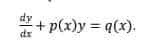
Differential Equations | Ordinary differential equations, their order and degree, the solution of differential equation by the methodof separation of variables, solution of a homogeneous and linear differential equation of the type
|
Three-Dimensional Geometry | Coordinates of a point in space, the distance between two points, section formula, direction ratios anddirection cosines and the angle between two intersecting lines. Equation of a line; Skewlines, the shortest distance between them and its equation. |
Trigonometry | Trigonometrical identities and trigonometrical functions, inverse trigonometrical functions andtheirproperties. |
Statistics and Probability | Measures of dispersion; calculation of mean, median, mode of grouped and ungrouped data, calculationofstandard deviation, variance and mean deviation for grouped and ungrouped data. Probability: Probabilityof an event, addition and multiplication theorems of probability, Baye's theorem, probability distributionof arandom variable. |
Vector Algebra | Vectors and scalars, the addition of vectors, components of a vector in two dimensions andthree-dimensional spaces, scalar and vector products |

JEE Main Syllabus 2027 for Paper 2
Subject | Topics |
Mathematics | • Sets, Relations And Functions • Complex Numbers And Quadratic Equations • Matrices And Determinants • Permutations And Combinations • Binomial Theorem And Its Simple Applications • Sequence And Series • Limit, Continuity And Differentiability • Integral Calculas • Diffrential Equations • Co-Ordinate Geometry • Three Dimensional Geometry • Vector Algebra • Trigonometry • Statistics And Probability |
General Aptitude (Part II) | UNIT - 1 Awareness of persons, Buildings, Materials, Objects and Textures related to Architecture andBuild-environment, Visualizing three-dimensional objects from two-dimensional drawings.Visualizing different sidesof three-dimensional objects, Analytical Reasoning Mental Ability (Visual, Numerical and Verbal) UNIT – 2 Three dimensional- perception: Understanding and appreciation of scale and proportions of objects,building forms and elements, colour texture harmony and contrast Design and drawing of geometrical orabstract shapes and patterns in pencil. Transformation of forms both 2D and 3D union, subtractionrotation,development of surfaces and volumes, Generation of plans, elevations and 3D views of objects, creatingtwo-dimensional and three-dimensional compositions using given shapes and forms. |
Drawing Part (for B.Arch) / Planning Part (for B.Plan) | Drawing (B.Arch): Sketching of scenes and activities from memory of urban landscapes (public spaces, markets, festivals, street scenes, monuments, recreational spaces, etc.), landscape (riverfronts, Jungle, Gardens, trees, Plants, etc.) and rural life. To be conducted in a Drawing sheet. Planning (B.Plan): 1. General Awareness ‑ General knowledge questions and knowledge about prominent cities, development issues, government programs, etc. 2. Social Sciences ‑ The idea of nationalism, nationalism in India, the pre‑modern world, 19th‑century global economy, colonialism, and colonial cities, industrialization, resources, and development, types of resources, agriculture, water, mineral resources, industries, national economy; Human Settlements, Power‑sharing, federalism, political parties, democracy, the constitution of India, Economic development‑ economic sectors, globalization, the concept of development, poverty; Population structure, social exclusion, and inequality, urbanization, rural development, colonial cities. 3. Thinking Skills ‑ Comprehension (unseen passage); map reading skills, scale, distance, direction, area, etc.; critical reasoning; understanding of charts, graphs, and tables; basic concepts of statistics and quantitative reasoning. |
Previous Year Changes in JEE Main Syllabus 2027
Candidates can check the changes observed in 2024 and 2025. The authority deleted several topics from the JEE Main syllabus.
JEE Main Physics Deleted Chapters 2025
Unit & Deleted Topics |
Scalars and Vectors |
Vector |
Addition and subtraction |
scalar and vector products |
Unit Vector |
Resolution of a Vector |
JEE Main Physics Deleted Chapters 2024
Unit & Deleted Topics | |
Physics and Measurement- Physics, technology, and society, accuracy and precision of measuring instruments | |
Kinematics- zero vector | |
Gravitation- Geostationary satellites | |
Properties of Solids And Liquids- Reynolds number, Newton’s law of cooling. | |
Thermodynamics- Carnot engine and its efficiency | |
Oscillations and Waves- Free, forced and damped oscillations, resonance. Doppler Effect in sound. | |
Current Electricity- Resistances of different materials.Colour code for resistors; Potentiometer - principle and its applications. | |
Magnetic Effects of Current and Magnetism- Cyclotron, Earth’s magnetic field and magnetic elements. Magnetic susceptibility and permeability. Hysteresis. Electromagnets and permanent magnets. | |
Electromagnetic Induction and Alternating Currents- Quality factor | |
Optics- Resolving power of microscopes and astronomical telescopes | |
Dual Nature of Matter and Radiation- Davisson-Germer experiment | |
Atoms and Nuclei- Isotopes, isobars: isotones. Radioactivity- alpha. beta and gamma particles/rays and their properties; radioactive decay law. | |
Communication Systems | |
Electronic Devices- Junction transistor, transistor action, characteristics of a transistor: transistor as an amplifier (common emitter configuration) and oscillator. Transistor as a switch. | |
JEE Main Chemistry Deleted Chapters 2024
Unit- Detailed Topics | |
Some Basic Concepts in Chemistry- Physical quantities and their measurements in Chemistry, precision, and accuracy, significant figures. S.I.Units, dimensional analysis | |
Atomic Structure- Thomson and Rutherford atomic models and their limitations; | |
States of Matter | |
Surface Chemistry | |
P- Block Elements- Groupwise study of the p - p-block elements Group -13 Preparation, properties, and uses of boron and aluminium; Structure, properties, and uses of borax, boric acid, diborane, boron trifluoride, aluminium chloride, and alums. Group -14. The tendency for catenation; Structure, properties, and uses of Allotropes and oxides of carbon, silicon tetrachloride, silicates, zeolites, and silicones. Group -15 Properties and uses of nitrogen and phosphorus; Allotrophic forms of phosphorus; Preparation, properties, structure, and uses of ammonia, nitric acid, phosphine, and phosphorus halides, (PCl3. PCl5); Structures of oxides and oxoacids of nitrogen and phosphorus. Group -16 Preparation, properties, structures, and uses of ozone: Allotropic forms of sulphur; Preparation, properties, structures, and uses of sulphuric acid (including its industrial preparation); Structures of oxoacids of sulphur. Group-17 Preparation, properties, and uses of hydrochloric acid; Trends in the acidic nature of hydrogen halides; Structures of Interhalogen compounds and oxides and oxoacids of halogens. Group-18 Occurrence and uses of noble gases; Structures of fluorides and oxides of xenon. | |
General Principles and Processes of Isolation of Metals | |
Hydrogen | |
Environmental Chemistry | |
S -Block Elements (Alkali and Alkaline Earth Metals) | |
Polymers | |
Chemistry In Everyday Life | |
JEE Main Maths Deleted Chapters 2024
Unit- Deleted Topics | |
Complex Numbers and Quadratic Equations- Square root of a complex number, triangle inequality | |
Matrices and Determinants- Properties of determinants, elementary transformations | |
Binomial Theorem and Its Simple Applications- Properties of Binomial coefficients | |
Sequence and Series- Sum up to n terms of special series; Sn, Sn2, Sn3. Arithmetic-Geometric progression | |
Limit, Continuity, and Differentiability- Rolle’s and Lagrange’s Mean Value Theorems | |
Integral Calculus- Integral as the limit of a sum | |
Co-Ordinate Geometry- Translation of axes, Straight line: equations of internal and external by sectors of angles between two lines. Equation of the family of lines passing through the point of intersection of two lines. Circle, conic sections: Condition for a line to be tangent to a circle, equation of the tangent. condition for Y = mx +c to be a tangent and point (s) of tangency. | |
Three-Dimensional Geometry- Equations of a line and a plane in different forms, the intersection of a line and a plane, coplanar lines | |
Vector Algebra- Scalar and vector triple product | |
Statistics and Probability- Bernoulli trials, and binomial distribution | |
Trigonometry -Heights, and distance | |
Mathematical Inductions | |
Mathematical Reasoning | |
Frequently Asked Questions (FAQs)
Q: Has NTA released the JEE syllabus for 2027?
A:
The authority is yet to release the JEE syllabus 2027.
Q: Has the JEE pattern changed in 2027?
A:
JEE 2027 pattern change will be announced.
Q: What are the JEE Main changes in syllabus?
A:
The JEE Main 2027 changes in syllabus is yet to be announced.
Q: Is section b removed from syllabus?
A:
No, section b is a compulsory section in JEE Main.
Articles
Related Stories
|
Upcoming Engineering Exams

Certifications By Top Providers
Explore Top Universities Across Globe
Popular Courses and Specializations
List of colleges accepting JEE Main
Browse Engineering Colleges by State
Questions related to JEE Main
On Question asked by student community
Have a question related to JEE Main ?
Dear Student,
You can access JEE Main Mathematics previous-year questions on Careers360. Practising previous-year questions will help you understand the exam pattern and question types.
Hello Student,
You can check the resources provided below:
Hope this helps!
Hello, since you are in Intermediate 2nd year with the MPC group and preparing for JEE Main, focus on completing the syllabus, revising important concepts and solving previous years’ JEE Main question papers. Take regular mock tests and analyse your mistakes to improve your score. Keep a realistic study schedule
Dear Student
Please specify whether you want Physics, Chemistry, or Mathematics, and which JEE Main/Advanced exam.
Hi Ansh Chauhan
Check the link below for the high-weightage Physics chapters for JEE Main 2027 based on recent exam trends. Students can use these chapters to prioritise their preparation and focus more on topics that have appeared frequently in previous papers.
https://engineering.careers360.com/articles/most-weightage-chapters-for-jee-main-physics-2027

Applications for Admissions are open.
Ranked #43 among Engineering colleges in India by NIRF | Get Upto 100% Scholarships
Woxsen University, Hyderabad
ApplyScholars’ Round Deadline: 14th Nov’26 | Earn upto 50% merit Scholarship + 10% for top performers | EFMD Accredited | AACSB (USA) & AMDISA Member | Highest CTC 28 LPA
SRM Institute of Science and Technology, Tiruchirappalli
ApplyApplication Free of Cost for Limited Time || NAAC A++ Accredited | Highest CTC 52 LPA | #11 in University Category by NIRF
Saveetha Engineering College, Chennai
ApplyAffiliated to Anna University | Highest CTC 44 LPA | Top Recruiters : JP Morgan Chase & Co, Nielson IQ, QUBE, META, GOOGLE, AMAZON & many more.
Dr Vishwanath Karad MIT World Peace University, Pune
ApplyHighest CTC 30 LPA | #9 in Management Category by Times B-School | Merit-Based Scholarship Upto - 50 Crores
ATLAS SkillTech University, Mumbai
ApplyCourses designed with CTOs, Data Scientists, and Cybersecurity experts | 50+ elective options
JEE Main Notifications
Explore Career Options
By IndustryNever miss JEE Main update
Get timely JEE Main updates directly to your inbox. Stay informed!