UPES B.Tech Admissions 2027
Ranked #43 among Engineering colleges in India by NIRF | Get Upto 100% Scholarships


JEE Main 2024 Question Paper - The National Testing Agency releases the JEE Main question paper 2024 on the official website, jeemain.nta.nic.in. Download the 2024 question paper PDF for free from the website. No login credentials are required to download the JEE Main 2024 question paper. Careers360 has also provided the JEE Main 2024 question paper PDF along with solutions on this page. With the help of the previous year’s question paper, analyse questions, compare answers, and understand the JEE Main exam pattern and difficulty level. To download the official JEE Mains 2024 question paper PDF, candidates can go through this article and download the PDF by clicking on the links provided in the article.
Candidates preparing for the upcoming Joint Entrance Examination can download the JEE Main question paper PDF 2024 via the links. Just click on the link to easily access the question paper and answer key. Check the table below with the link for the JEE Main Question Paper 2024 PDF.
| Exam Dates | Shift 1 & 2 Question Paper with Solution |
|---|---|
January 24 | |
January 27 | |
January 29 | |
January 30 | |
January 31 | |
February 1 |
Get expert advice on college selection, admission chances, and career path in a personalized counselling session.
The JEE Main 2024 exam was conducted in two sessions and in two shifts. Candidates can check a thorough analysis of the session and sheet-wise question paper by experts of careers360. The JEE Main 2024 question paper is based on the latest syllabus and the latest pattern, which was changed by NTA. Candidates will find out the paper analysis here to see what they can expect fro the upcoming exam.
To download the question paper from the official website, candidates just have o follow the steps:
Visit the official website of the National Testing Agency, nta.ac.in/Home.
On the home page, click on the ‘Downloads’ option.
Candidates will now be directed to the previous year's exam paper window.
Now, on the search option, enter the exam year (select 2024) and the exam type (select JEE Main),
Click ‘Search’ and the JEE Main 2024 question paper download link will be displayed in table format.
Candidaets can click on the question paper 2024 type and download in PDF format.
Also Check:
JEE Main Last 10 Years Question Papers with Solutions
JEE Main Question Paper with Solutions and Answer Keys
For JEE Main exam preparation, the previous year's JEE Main question papers are an important resource. The JEE Main 2024 question paper, based on the latest syllabus and latest pattern, offers the following benefits-
Helps in revising and identifying topics that need more practice and conceptual clarity.
Students gain a better understanding of the JEE Main exam pattern, frequently appearing topics and more. It acts as an effective preparation strategy for the exam.
Candidates can improve their time management skills. They can also use it to determine which sections to concentrate on for better accuracy and speed.
Regular practice of JEE Main question paper pdf with solutions can help aspirants gain confidence and reduce anxiety before the exam.
JEE Main Previous Year Questions 2024
Chemistry
1. Cyclohexene  is __________ type of an organic compound.
a)Benzenoid non-aromatic
b)Benzenoid aromatic
c)Alicyclic
d)Acyclic
Solution :  is alicyclic compound
2. Which of the following statements are correct?
A. Glycerol is purified by vacuum distillation because it decomposes at its normal boiling point.
B. Aniline can be purified by steam distillation as aniline is miscible in water.
C. Ethanol can be separated from the ethanol-water mixture by azeotropic distillation because it forms azeotrope.
D. An organic compound is pure, if mixed M.P. remains the same.
Choose the most appropriate answer from the options given below :
Solution: Option (B) is incorrect because aniline is immiscible in water.
Physics
1. By what percentage will the illumination of the lamp decrease if the current drops by 20%?
a)56% b) 26% c) 36% d)46%
Solution: Heat and Power developed in a resistor
Heat developed in a resistor: When a steady current flows through a resistance R for time t, the loss in electric potential energy appears as increased thermal energy(Heat H) of the resistor and  The power developed =
 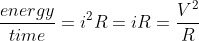 (from Ohm's law)
The unit of heat is the joule (J)
The unit of power is the watt (W)
2. A block of mass 5 kg is there on a smooth inclined plane which is making 30 degrees angle with the horizontal, And a hanging mass of 6 kg is attached with it by a string which passes through a pulley; the acceleration of the system is
4m/s-2 b)1.8m.s-2 c) 4.5m/s-2 d) 5m/s-2
Solution: Let us see the fbd for the system
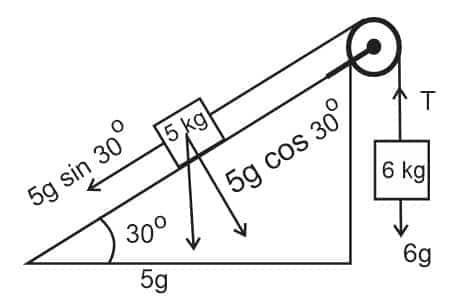
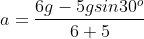
For acceleration, we can write the equation as

Maths
1. If the mean and variance of five observations are  and
and  respectively and the mean of the first four observations is
  , then the variance of the first four observations in equal to
a) b)
b) c)
c) d)
d)
Solution: MEAN (Arithmetic Mean)
The mean is the sum of the value of each observation in a dataset divided by the number of observations.
Mean of the Ungrouped Data
If n observations in data are x1, x2, x3, ……, xn, then arithmetic mean  is given by

Variance and Standard Deviation
The mean of the squares of the deviations from the mean is called the variance and is denoted by σ2 (read as sigma square).
Variance is a quantity that leads to a proper measure of dispersion.
The variance of n observations x1 , x2 ,..., xn is given by
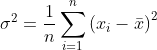
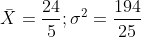
Let the first four observations be 
Here, 
Also, 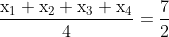

Now from eqn -1
 Now,
Now, 
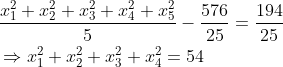
Now, the variance of the first 4 observations

2. If the general term of the first AP = 3n-5 and that of the second AP is 3n+5. Then the 50th term of AP where both the AP are added
a)155 b) 145 c) 300 d)150
Solution: As we learned,
Properties of an AP:
If  are two APs,
then  is also an AP.
In this Question,


Frequently Asked Questions (FAQs)
It is advised to candidates that they should solve at least 10 previous year's question papers to know more about the exam pattern.
Yes, candidates must attempt all the 75 questions in JEE Mains. However, candidates should only attempt the questions if they are confident about the answer.
Yes, there is a negative marking in the JEE Main Exam in both sections for each subject.

On Question asked by student community
Dear Student,
You can access JEE Main Mathematics previous-year questions on Careers360. Practising previous-year questions will help you understand the exam pattern and question types.
Hello Student,
You can check the resources provided below:
Hope this helps!
Hello, since you are in Intermediate 2nd year with the MPC group and preparing for JEE Main, focus on completing the syllabus, revising important concepts and solving previous years’ JEE Main question papers. Take regular mock tests and analyse your mistakes to improve your score. Keep a realistic study schedule
Dear Student
Please specify whether you want Physics, Chemistry, or Mathematics, and which JEE Main/Advanced exam.
Hi Ansh Chauhan
Check the link below for the high-weightage Physics chapters for JEE Main 2027 based on recent exam trends. Students can use these chapters to prioritise their preparation and focus more on topics that have appeared frequently in previous papers.
https://engineering.careers360.com/articles/most-weightage-chapters-for-jee-main-physics-2027

Ranked #43 among Engineering colleges in India by NIRF | Get Upto 100% Scholarships
Apply for B.E at East Point College of Engineering and Technology | Affiliated to VTU | AICTE Approved | NBA Accredited | Highest CTC 33 LPA
Merit Scholarships | NAAC A+ Accredited | Top Recruiters : E&Y, CYENT, Nvidia, CISCO, Genpact, Amazon & many more
Application Free of Cost for Limited Time || NAAC A++ Accredited | Highest CTC 52 LPA | #11 in University Category by NIRF
IIRF Top Private Engineering College 2026: All India Rank #13 | H-CTC 18 LPA | Merit-Based Scholarships
Dive into everything you need to know about IITs—from eligibility and cutoffs to fees and placements.