School of Computer Science, UPES, Dehradun
Ranked #43 among Engineering colleges in India by NIRF | Get Upto 100% Scholarships


Dr. Vishal P. Sorathiya is an Associate Professor in the Research Cadre of Parul University's Faculty of Engineering and Technology, with an h-index of 30 and an i10-index of 61, and he appears in the Stanford-Elsevier global rankings of the top two percent of scientists. His recorded fields are optoelectronics, photonics, and applied physics.
This Story also Contains
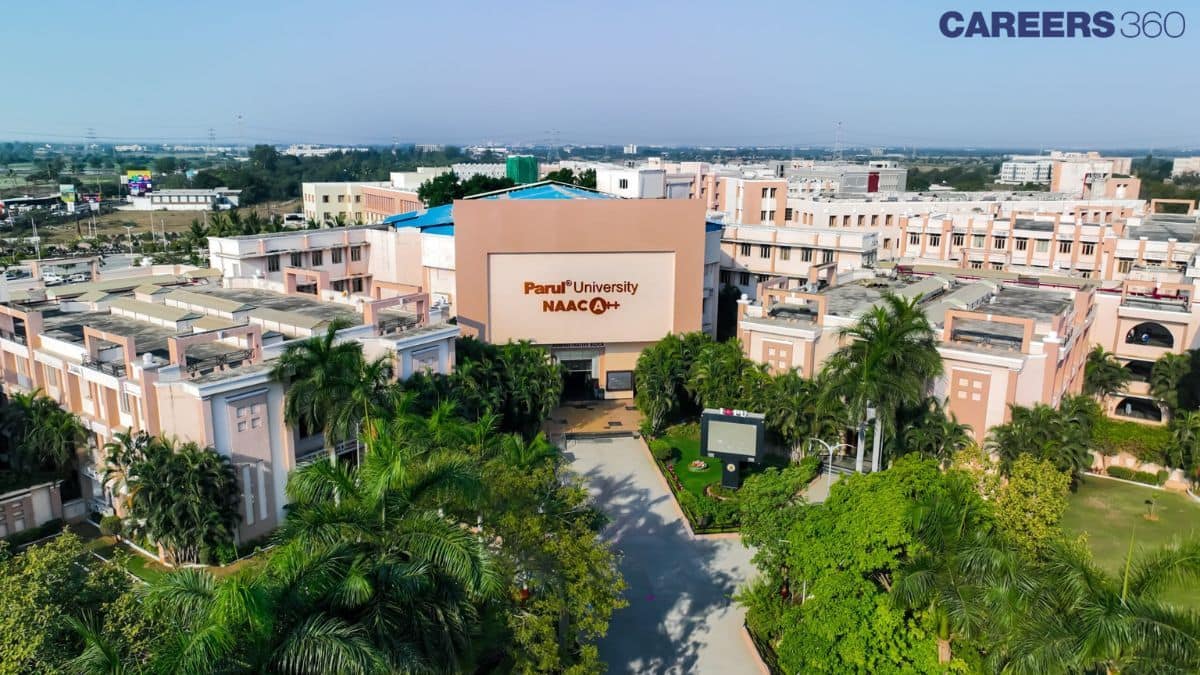
He is one of the two engineering researchers, alongside colleagues in pharmacy and applied science, who give Parul University its presence in the Stanford-Elsevier list, and the only one whose field is the physics of light. An h-index of 30 in an engineering discipline, where citation accumulates more slowly than in the fast-publishing life sciences, represents a substantial and well-established body of cited work.
Photonics is to light what electronics is to electric current: the science and engineering of generating, controlling, and detecting light to carry and process information. Optoelectronics sits at the junction of the two, in devices that convert between light and electricity, from the lasers in a fibre-optic transmitter to the sensors in a camera, turning light into information and information back into light.
Ranked #43 among Engineering colleges in India by NIRF | Get Upto 100% Scholarships
Scholars’ Round Deadline: 14th Nov’26 | Earn upto 50% merit Scholarship + 10% for top performers | EFMD Accredited | AACSB (USA) & AMDISA Member | Highest CTC 28 LPA
Also see: Parul University Admissions
The field is not niche. It underpins the fibre-optic networks that carry the internet, the sensors in countless devices, laser systems, and a growing range of computing and communication technologies. As electronic systems approach physical limits, photonic approaches are among the most promising directions for the next generation of high-speed technology. A researcher established in this area is working at a point where the discipline is actively advancing rather than settling.
An h-index of 30 in an engineering discipline indicates a researcher with a well-established and frequently cited body of work. For a student of electronics, communication, or a related engineering field, it signals a research group engaged with an advanced and forward-looking area of the discipline, and a supervisor whose work the wider field has already recognised.
Parul University reports more than 250 technology laboratories, including facilities for the advanced computing and engineering disciplines that photonics research connects to. Details of engineering research are published on the Parul University blog, and the university appears in the NIRF Top 50 for Innovations.
For a prospective engineering student, the presence of a highly cited photonics researcher signals a department with genuine research activity at the frontier of its field, rather than one confined to established curricula.
Also see: Parul University Courses
There is a practical reason photonics attracts research attention. For decades, computing advanced by making electronic components smaller and faster, but that process is approaching physical limits that cannot be pushed much further.
Light offers a way past several of those limits. Photonic systems can carry more information, over greater distances, with less energy loss than electronic ones, which is why the world's data already travels through fibre-optic light rather than copper wire. As demand for speed and bandwidth grows, the engineering of light moves from a specialism toward the centre of the discipline. A student entering the field now is entering it early.
The citation record is public and directly checkable.
Search the name: Dr. Vishal P. Sorathiya's publications and citations appear in public citation databases.
Check the Stanford-Elsevier release: openly published and searchable by name.
Read the recorded fields: optoelectronics, photonics, and applied physics, and whether they match a student's interests.
A named, verifiable researcher is a fact a prospective student can confirm independently, which is the standard any faculty claim should be held to.
Also see: Parul University Placements
Citation figures measure the influence of a researcher's published work and nothing more. They are silent on teaching and supervision, which a prospective student should weigh separately.
Their strength is their objectivity: they come from the citations of other researchers, not from the institution being assessed. That is why they anchor these profiles, and why a family should treat a named, checkable metric as more informative than any unverifiable claim of excellence.
A prospective student might reasonably ask how a research specialism like photonics connects to what they will actually study. The answer is that advanced research shapes the upper years of a curriculum and the projects available to students.
A department with a photonics research group can offer final-year projects, electives, and dissertation topics in the area, and a supervisor who can guide a student into it. The specialism does not replace the core engineering curriculum; it extends it, giving a motivated student a route toward the frontier of the field while completing the fundamentals. That route exists only where the research does.
Disclaimer: This article was distributed by Parul University and has been published as a part of Careers360 marketing initiative.
Frequently Asked Questions (FAQs)
Dr. Vishal P. Sorathiya is an Associate Professor in the Research Cadre of Parul University's Faculty of Engineering and Technology. He holds an h-index of 30 and an i10-index of 61 and appears in the Stanford-Elsevier global top two percent of scientists.
His recorded fields are optoelectronics, photonics, and applied physics, the science and engineering of generating, controlling, and detecting light to carry and process information.
Dr. Sorathiya holds an h-index of 30 and an i10-index of 61, as recorded in the Stanford-Elsevier global rankings.

On Question asked by student community
Hello Dear Student,
For M.Tech in Artificial Intelligence and Data Science at Parul University:
Hostel expenses vary depending on room type and occupancy:
No, the application fee at Parul University is generally non-refundable. While the university may have specific refund policies for other fees, the application fee itself is typically not eligible for a refund unless stated otherwise, according to Parul University's official policy.
Hello,
Parul University in Vadodara offers a well-rounded Arts, Humanities, and Social Sciences program. The university boasts experienced faculty, modern infrastructure, and a diverse curriculum that encourages critical thinking and creativity. Students benefit from various extracurricular activities and strong industry connections. However, it's advisable to check recent student reviews and
Hello Aspirant,
Hope you are doing great. Candidates interested in pursuing a career in visual merchandising can enroll in diploma, degree, post-graduate, or certificate programmes. 10+2 is the minimum requirement for applying to visual merchandising degrees at various institutes/colleges/universities. Candidates should budget between Rs. 4 lakh and Rs. 5 lakh
Hi Aspirant!
Parul University , Gujarat offers a various number of programs in different fields such as Science, medicine , architecture, mathematics, engineering, animation and design, commerce, computer application and IT, Law, management, pharmacy and much more.
The admission to any of these courses is done one the merit basis

Ranked #43 among Engineering colleges in India by NIRF | Get Upto 100% Scholarships
Scholars’ Round Deadline: 14th Nov’26 | Earn upto 50% merit Scholarship + 10% for top performers | EFMD Accredited | AACSB (USA) & AMDISA Member | Highest CTC 28 LPA
Application Free of Cost for Limited Time || NAAC A++ Accredited | Highest CTC 52 LPA | #11 in University Category by NIRF
Affiliated to Anna University | Highest CTC 44 LPA | Top Recruiters : JP Morgan Chase & Co, Nielson IQ, QUBE, META, GOOGLE, AMAZON & many more.
NAAC A+ Grade | Affiliated to VTU & approved by AICTE.
100+ Recruiters | 100+ Placements of 2026 Batch | NBA & NAAC Accredited | Highest CTC 37 LPA