School of Computer Science, UPES, Dehradun
Ranked #43 among Engineering colleges in India by NIRF | Get Upto 100% Scholarships


The article below, shared by Chitkara University, discusses how the traditional "IIT or nothing" mindset for engineering careers in India is becoming outdated. As the software industry now prioritises hands-on, deployable skills over pure theory, Chitkara University is gaining ground with genuine industry partnerships (AWS, Microsoft, Apple), specialised CSE tracks (AI/ML, Cloud Computing, Cybersecurity, Game Design, Full Stack, etc.), dedicated Centres of Excellence, strong placement records (highest package Rs 1.11 Cr), and cost-effective 2+2 global transfer pathways to top universities abroad.
This Story also Contains
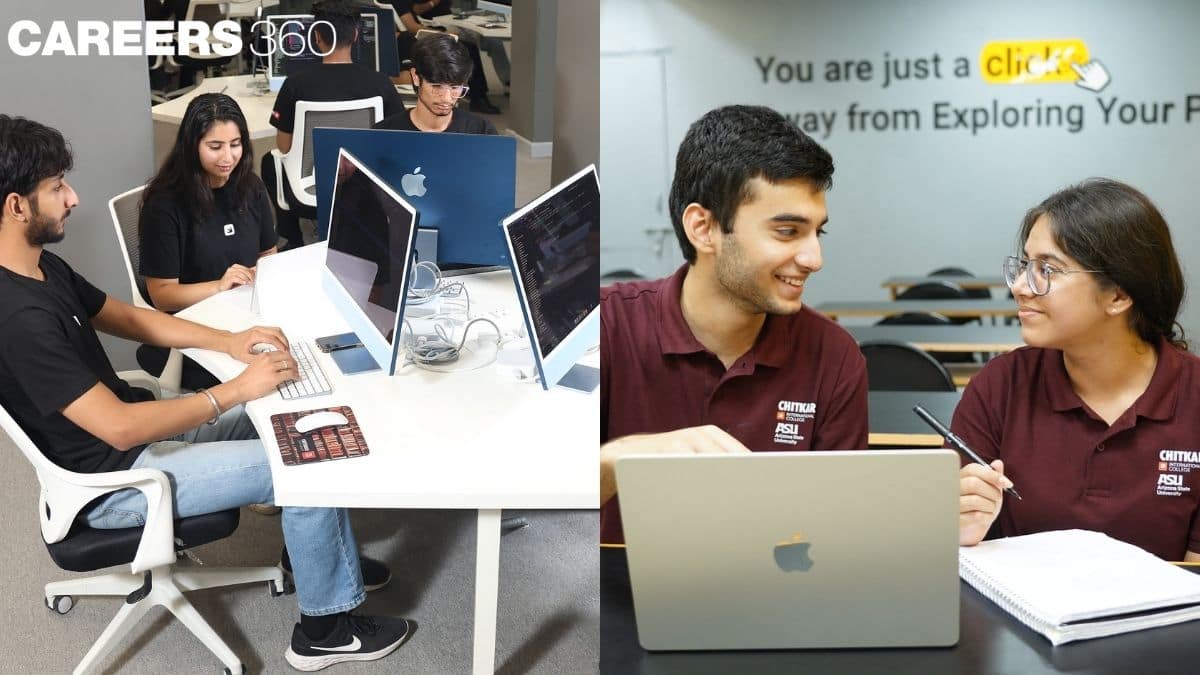
“For decades, the conversation around engineering education in India has started and ended in the same place: the IITs. Getting in or not getting in has shaped the ambitions of millions of students and the anxieties of millions more parents. And while the IITs remain world-class, something has quietly shifted in how the software industry actually hires, and what it looks for when it does.
The engineers building India's next wave of technology products are increasingly coming from a different kind of campus. Not lesser. Different.
Ask any engineering recruiter at a mid-to-large technology company about their biggest hiring challenge and you'll hear some version of the same answer: graduates who know the theory but have never shipped anything real. Students who can solve data structure problems on a whiteboard but haven't deployed a cloud application, trained a machine learning model on a live dataset, or built a mobile app that someone actually downloaded.
Ranked #43 among Engineering colleges in India by NIRF | Get Upto 100% Scholarships
Diploma (17 Specializations), B.Tech / B.Tech (Hons.) / IE-B.Tech - 4 years - 25+ specializations | M. Tech - 14+ specializations | Highest CTC – 60 LPA
Also See: Chitkara University Admissions
This isn't a criticism of students. It's a structural problem. For most of the past three decades, India's computer science curriculum was designed around examination cycles, not industry workflows. The assumption was that companies would train fresh hires on the job. That assumption no longer holds. Faster release cycles and leaner teams mean employers increasingly want engineers who can contribute from day one.
Describing industry collaboration in education is easy. Delivering it is considerably harder and the difference shows up in the details.
The credible version isn't a company logo on a brochure or a guest lecture once a semester. It's curriculum co-designed with engineers who are actively working in the field, laboratories equipped with the tools professionals actually use, and a sustained institutional relationship where industry partners are invested in graduate outcomes because those graduates are their future hires.
Chitkara University, located near Chandigarh, has built this kind of infrastructure across several domains. Its Cloud Computing specialisation runs in collaboration with Amazon Web Services, meaning students work directly within the AWS ecosystem rather than a simulation of it. The AI and Machine Learning track is co-developed with Microsoft, with curriculum aligned to how AI is being deployed in enterprise environments today. The Mobile App Development specialisation is powered jointly by Apple and Infosys, with students working through the iOS development lifecycle from design to App Store deployment.
Three on-campus facilities bring these partnerships into physical form. The Capgemini Code Experience Centre gives students access to a professional-grade software development environment. The Jio Games Innovation Centre supports game design and interactive technology. The iOS Student Development Centre provides dedicated Apple platform infrastructure. These aren't amenities. They're the difference between reading about a workflow and actually working within one.
The software industry of 2025 has fractured into highly specialised domains, each with its own toolchain, career trajectory, and hiring market. Industry-integrated universities have responded by offering defined specialisation tracks within the undergraduate degree itself, so students enter the workforce with genuine depth in a specific field rather than a general credential.
Full Stack Development remains one of the most consistently demanded skills across every sector building software. Cybersecurity has evolved from an IT function into a board-level priority, with demand for trained graduates far outstripping supply. Data Science sits at the intersection of mathematics, programming, and domain knowledge, valuable across finance, healthcare, logistics, and beyond.
Cloud Computing with AWS prepares students for the infrastructure layer of modern software, with the AWS certification pathway giving graduates a globally recognised credential. Game Design is routinely underestimated. The global gaming industry generates more revenue than film and music combined, and the technical skills it demands are increasingly relevant in simulation, AR/VR, and training technologies.
The AI and Machine Learning specialisation, co-developed with Microsoft, addresses what is arguably the most significant talent gap in global technology right now. CSE with AI and Future Technologies extends this further, into blockchain and next-generation cloud architectures moving from experiment into enterprise application.
One persistent anxiety among students and parents is that genuinely international career outcomes require going abroad for education. The financial reality for most Indian families makes that difficult. Tuition fees, living costs, visa uncertainty, and student debt are real barriers even when the aspiration isn't.
The 2+2 pathway model addresses this directly. Students complete the first two years of their degree in India, then transfer to a partner university abroad for the final two years, graduating with a degree from that international institution at roughly a third of the cost of full overseas enrollment.
Chitkara has established these pathways across three countries. Computer Engineering students can transfer to York University in Toronto, graduating with a BSc in Computer Science from one of Canada's leading research universities. Software Engineering and AI ML students have a pathway to Deakin University in Australia, ranked in the top one percent of universities globally. The Computer Science and Technology track connects to Arizona State University, consistently ranked among America's most innovative institutions. In each case, the first two years at Chitkara are mapped to the partner university's academic standards, so students don't arrive abroad needing to catch up.
The traditional campus recruitment hierarchy, IITs first, NITs second, everyone else after, has never been as absolute as it appeared. Recruiters have always evaluated candidates on demonstrated skills, not just institutional prestige. What has changed is that the gap between what industry-integrated universities produce and what legacy institutions produce has, in some respects, narrowed.
Companies including Google, Amazon, Microsoft, Wipro, Accenture, Deloitte, and Zomato regularly recruit from campuses with genuine industry alignment. The numbers from universities like Chitkara, over 700 campus recruiters annually with the highest package in the 2025 cycle reaching Rs. 1.11 crore from Amazon, reflect how seriously the industry takes graduates from these programs. A student with deep cloud architecture expertise, a real portfolio of AWS deployments, and hands-on enterprise development experience is a different profile from a general CSE graduate, regardless of which institution either attended.
For students currently in Class 11 or 12, the decision about where to study engineering remains one of the most consequential they'll make. The information environment around that decision is still shaped heavily by a hierarchy that the industry has quietly started to move beyond.
The questions worth asking are practical ones: Does the university have structural partnerships with the companies you want to work for, their labs, their tools, their engineers, not just their logos? Does the specialisation you're choosing reflect where the industry is heading, not just where it was five years ago?
The IIT system remains formidable. But the idea that a meaningful technology career requires admission into one of those institutions, and that everything else is a compromise, is increasingly a story about the past. The engineers building what comes next are coming from a wider range of places than that narrative allows for.
Chitkara University is a UGC-recognised and NAAC-accredited private university in North India, with campuses in Punjab and Himachal Pradesh, offering career-oriented undergraduate and postgraduate programs in Engineering, Business, Healthcare, Pharmacy, Design, Architecture, Hospitality, and emerging technology fields. For students planning higher education, the University provides industry-aligned programs designed to combine academic excellence with practical exposure.
The curriculum emphasises experiential learning through internships, industry projects, research opportunities, and global collaborations, supported by modern infrastructure, advanced laboratories, industry mentorship, and skill-based training that strengthens student employability. Backed by 2,000+ campus recruiters and 300+ international academic and industry collaborations, students gain strong placement support, international exposure, academic exchange, and collaborative research opportunities.
Consistently ranked among leading institutions by national and global frameworks such as NIRF, QS World University Rankings, and Times Higher Education, the University maintains high academic rigour and industry relevance. With strong corporate partnerships and a focus on innovation, entrepreneurship, and interdisciplinary learning, it prepares students for emerging career opportunities in India and abroad.
What CSE specialisations are available at industry-integrated universities in India? Leading programs offer tracks in Full Stack Development, Cybersecurity, Data Science, Cloud Computing with AWS, Game Design, Mobile App Development, AI and Machine Learning, and broader AI and Future Technologies specialisations. At Chitkara University near Chandigarh, for instance, the AI and ML track is co-developed with Microsoft and the Cloud Computing specialisation runs directly on AWS infrastructure — the same platforms students will encounter in professional roles.
What is the 2+2 engineering program and how does it work? Students complete the first two years of their undergraduate degree in India, then transfer to a partner university abroad for the final two years, graduating with a degree from that international institution. Chitkara University offers 2+2 pathways to Arizona State University in the USA, York University in Canada, and Deakin University in Australia — with first-year curriculum mapped to each partner's academic standards, so the transfer is seamless.
What are Centres of Excellence in engineering colleges and why do they matter? They are dedicated facilities established jointly with industry partners, equipped with professional-grade tools that mirror real workplace environments — giving students hands-on experience with the actual platforms they'll use in their careers rather than simulations of them. Chitkara University's campus includes three such centres: the Capgemini Code Experience Centre, the Jio Games Innovation Centre, and the iOS Student Development Centre, the last built in partnership with Apple and Infosys.
Which companies recruit from industry-integrated engineering campuses? Google, Amazon, Microsoft, Wipro, Infosys, Accenture, Deloitte, and Tata Motors are among the companies that actively recruit from campuses with strong industry integration. Always check institution-specific placement data for program-level outcomes.
What should I look for when choosing a private engineering university in India for CSE? Three things signal genuine quality: structural industry partnerships (not just logos, but co-designed curriculum and dedicated labs), a track record of placement outcomes backed by verifiable data, and accreditation from bodies like NAAC. Chitkara University, for example, holds a NAAC A+ accreditation, features in the NIRF rankings, and attracted over 700 campus recruiters in its most recent placement cycle — with the highest package reaching ₹1.11 crore from Amazon.”
Disclaimer: This content was distributed by Chitkara University and has been published as part of Careers360’s marketing initiative.

On Question asked by student community
For Pharm D students at Chitkara University, having a laptop can be highly useful for coursework, assignments, and research. Many aspects of modern academic studies involve digital resources, online research, and software tools that are easier to manage with a laptop. While it might not be mandatory for all tasks,
Hello,
Based on the information provided, you have secured 67% in your board examinations and a score of 49.9 in JEE Mains. Chitkara University, Punjab, requires candidates to have passed their 10+2 examination with a minimum aggregate of 60% or at least 60% in Physics, Chemistry, and Mathematics. Additionally, appearing
Chandigarh University:
Civil Engineering
Fees: INR 7.08 lakhs for 4 years
Seats: 240 seats
Eligibility Criteria : 10+2 with Physics and Mathematics as compulsory subjects along with one of the following subjects: Chemistry / Biotechnology / Computer Science / Biology with at least 50% marks in the aggregate.
Placement percentage
Hello,
For its Rajpura Campus, Chitkara University is more known. When something is called renowned, it implies that there is greater flexibility in terms of locations. The Rajpura campus has supplanted the Baddi campus as the centre for engineering studies. The instructors, coursework, and extracurricular activities are great. Regarding placements,
I think you should go for LPU for interior designing. LPU is the best choice for B.Designing where the students get tons of career opportunities. Because of quality education and world-class placements, LPU has marked its place in top 74th Global Universities.
Let me highlight some of the major factors

Ranked #43 among Engineering colleges in India by NIRF | Get Upto 100% Scholarships
Diploma (17 Specializations), B.Tech / B.Tech (Hons.) / IE-B.Tech - 4 years - 25+ specializations | M. Tech - 14+ specializations | Highest CTC – 60 LPA
Scholars’ Round Deadline: 14th Nov’26 | Earn upto 50% merit Scholarship + 10% for top performers | EFMD Accredited | AACSB (USA) & AMDISA Member | Highest CTC 28 LPA
Special Scholarship for Students from Goa (Get an exclusive scholarship of ₹20,000 if you're a Goa-based student) | Bringing Parul Education Trust's 30-year Education Legacy to Goa
NAAC A+ Grade | Affiliated to VTU & approved by AICTE.
100+ Recruiters | 100+ Placements of 2026 Batch | NBA & NAAC Accredited | Highest CTC 37 LPA