School of Computer Science, UPES, Dehradun
Ranked #43 among Engineering colleges in India by NIRF | Get Upto 100% Scholarships


JEE Advanced 2026 Chemistry tested students across physical, organic, and inorganic chemistry through a mix of single-correct, multiple-correct, and numerical-type questions. While Chemistry was the highest-scoring section compared with Physics and Mathematics, the question-level data shows a clear difference between the straightforward ones and the ones that needed deeper calculation, concept integration, and careful interpretation.
This Story also Contains
In this article, we have discussed JEE Advanced 2026 Chemistry Question-Wise Analysis, with a focus on the JEE Advanced 2026 Chemistry tough questions, easiest questions, and highly tricky questions. Students can easily analyse their performance in the JEE Advanced exam using this analysis.
Chemistry had 16 questions in Paper 1 and 18 questions in Paper 2. According to the question-level analysis, Paper 2 Chemistry contained more highly difficult questions than Paper 1.
In Paper 1, 3 of the 16 chemistry questions were classified as difficult, while 6 were moderate and 7 were easy. In Paper 2, 7 of the 18 Chemistry questions were classified as difficult, 8 as moderate, and only 3 as easy.
The Chemistry Paper 1 results show quite some variation in student performance across the 16 questions, really. Some questions were answered successfully by a large portion of candidates, while others ended up with really high wrong response rates and also partial-mark percentages.
Question No. | % Not Attempted | % Full Marks | % Partial Marks | % Wrong Response |
1 | 66.59 | 14.35 | — | 19.07 |
2 | 34.24 | 26.77 | — | 38.99 |
3 | 8.82 | 35.00 | — | 56.18 |
4 | 62.27 | 10.71 | — | 27.02 |
5 | 17.02 | 3.79 | 50.43 | 28.75 |
6 | 40.31 | 9.86 | 20.21 | 29.62 |
7 | 52.53 | 4.68 | 9.66 | 33.13 |
8 | 40.87 | 3.40 | 43.92 | 11.81 |
9 | 19.77 | 30.51 | — | 49.72 |
10 | 11.73 | 21.21 | — | 67.06 |
11 | 12.95 | 24.34 | — | 62.71 |
12 | 16.21 | 20.91 | — | 62.88 |
13 | 24.33 | 44.84 | — | 30.83 |
14 | 11.65 | 60.69 | — | 27.67 |
15 | 40.77 | 31.42 | — | 27.82 |
16 | 40.37 | 27.61 | — | 32.03 |
From the above data, it can be seen that Question 14 had the highest rate of full marks in Chemistry Paper 1, at 60.69%, followed by Question 13 at 44.84%. This indicates that these questions were comparatively more manageable for candidates.
However, Question 8 had the lowest rate of full marks at just 3.40%, followed closely by Question 5 at 3.79%. Question 10 had the highest wrong-response rate of 67.06%, showing that although only 11.73% of candidates left it unanswered, a large majority of those who attempted it selected an incorrect response.
Question 5 stands out because 50.43% of candidates received partial marks, while Question 8 had 43.92% partial marks. This suggests that many students were able to solve part of these questions but failed to meet all the requirements for full marks.
Chemistry Paper 2 also showed a wide variation in student performance. While some questions had comparatively high full-mark percentages, several questions had extremely low full-mark percentages and very high wrong-response rates.
Question No. | % Not Attempted | % Full Marks | % Partial Marks | % Wrong Response |
1 | 67.42 | 12.27 | — | 20.31 |
2 | 15.92 | 43.67 | — | 40.41 |
3 | 62.45 | 10.28 | — | 27.28 |
4 | 55.75 | 13.24 | — | 31.01 |
5 | 12.00 | 9.72 | 13.23 | 65.05 |
6 | 36.70 | 7.17 | 36.34 | 19.79 |
7 | 4.87 | 42.12 | 14.14 | 38.87 |
8 | 35.20 | 14.50 | 15.57 | 34.73 |
9 | 24.57 | 16.85 | 20.56 | 38.02 |
10 | 10.70 | 41.85 | — | 47.45 |
11 | 33.61 | 3.57 | — | 62.82 |
12 | 38.34 | 2.78 | — | 58.88 |
13 | 16.57 | 16.92 | — | 66.51 |
14 | 38.60 | 1.21 | — | 60.19 |
15 | 34.92 | 0.55 | — | 64.53 |
16 | 31.17 | 8.95 | — | 59.88 |
17 | 42.49 | 2.69 | — | 54.82 |
18 | 41.96 | 4.47 | — | 53.58 |
From the above data, it can be seen that Question 2 had the highest rate of full marks in Chemistry Paper 2, at 43.67%, followed by Question 10 at 41.85% and Question 7 at 42.12%. These questions were comparatively better handled by candidates.
In contrast, Question 15 had the lowest rate of full marks at just 0.55%, while Questions 14, 17 and 12 had full-mark rates of only 1.21%, 2.69% and 2.78%, respectively. Question 13 recorded the highest wrong-response rate at 66.51%, followed by Question 5 at 65.05% and Question 15 at 64.53%.
Question 6 stands out because 36.34% of candidates received partial marks, while Question 9 had 20.56% partial marks. This indicates that a considerable number of students were able to make partial progress but could not complete the questions correctly. Overall, Chemistry Paper 2 contained several questions where conceptual clarity, careful calculation, and complete problem-solving were essential for securing full marks.
Read the freely downloadable ebook for proper analysis: JEE Advanced 2026 Question Analysis: Hardest, Easiest & Tricky Questions Explained
Get expert advice on college selection, admission chances, and career path in a personalized counselling session.
Paper 1 Chemistry was a mix of conceptual, numerical, and statement-based questions. In the external analysis, they mostly rated Chemistry in Paper 1 as easy to moderate, but yeah, a few questions here and there were tricky and pretty calculation-intensive.
According to the high wrong-answer rate and very few full-mark scorers (ranked by difficulty index) from the response data, these were the five toughest questions of Paper 1:
Question | Concept | Chapter Name | Difficulty Index | % Not Attempted | % Wrong |
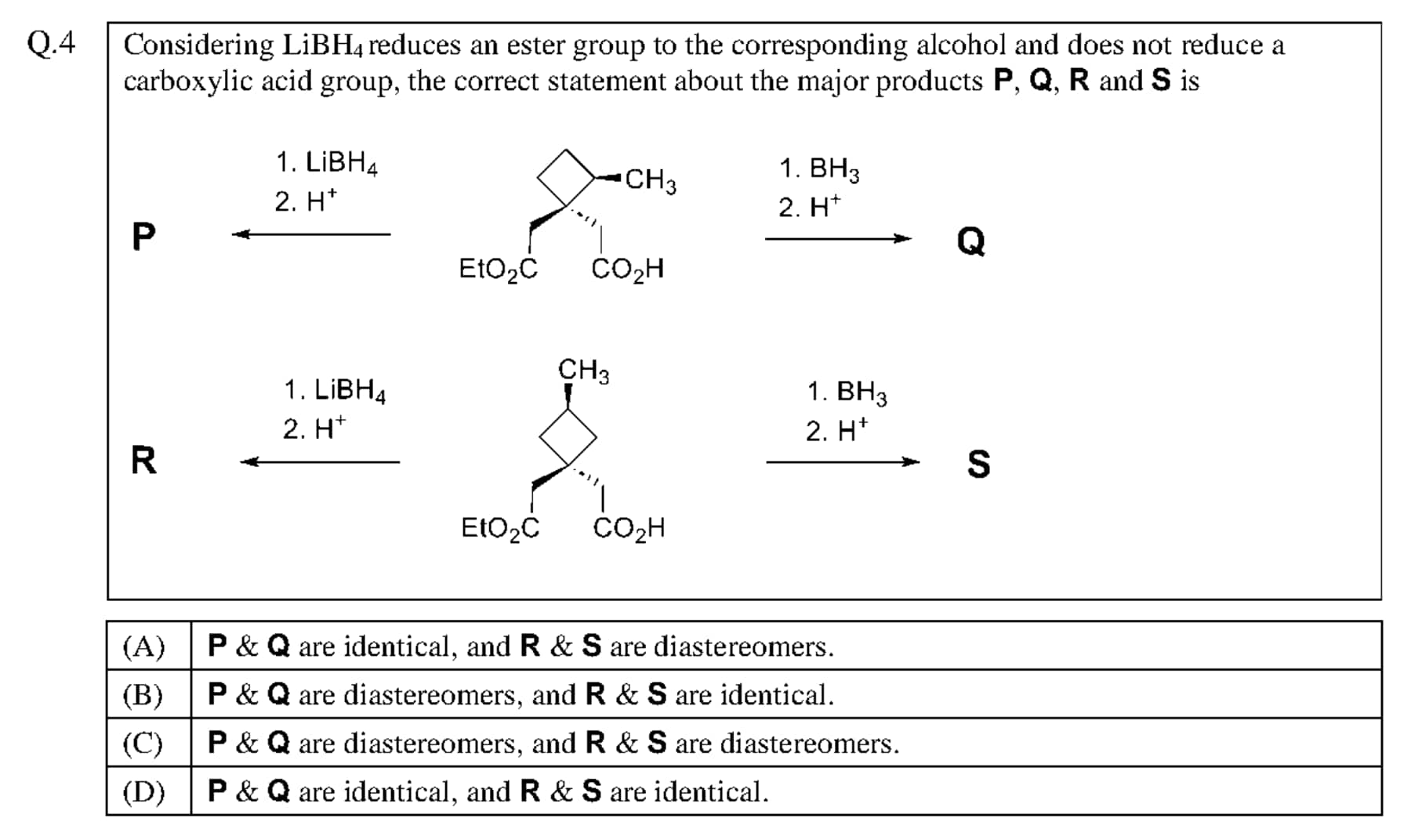
Q4 | LiBH₄ vs BH₃ reduction: stereochemical relationships | Aldehydes, Ketones & Carboxylic Acids | 78.6 | 62.3% | 27.0% |
Q7 | PtF₆ + O₂ ionic product | 76.7 | 52.5% | 33.1% | |
Q1 | Work in two-step isothermal compression | 73.3 | 66.6% | 19.1% | |
Q12 | Collinear carbons after diyne alkylation | 65.3 | 16.2% | 62.9% | |
Q10 | Isomers of square planar K[M(NCS)(NO₂)(gly)] | Coordination Compounds | 64.5 | 11.7% | 67.1% |
The toughest chemistry questions of Chemistry Paper 2 are given below in the table. Based on the Difficulty Index, Q14 and Q15 from Paper 2 were the hardest Chemistry questions, with both having a Difficulty Index of 86.5.
Rank | Question | Concept | Chapter name | Difficulty Index | % Not Attempted | % Wrong |
1 | Q14 | Copolymer mass from monomers X and Y | Polymers, with Some Basic Concepts of Chemistry | 86.5 | 38.6% | 60.2% |
2 | Q15 | Molar volume ratio, vapour vs liquid B | 86.5 | 34.9% | 64.5% | |
3 | Q17 | Kjeldahl nitrogen estimation: H₂SO₄ volume | Principles of Practical Organic Chemistry | 85.7 | 42.5% | 54.8% |
4 | Q12 | Boiling point elevation with dissociation | Solutions | 84.9 | 38.3% | 58.9% |
5 | Q18 | Carius sulphur estimation: BaSO₄ mass | Principles of Practical Organic Chemistry | 83.9 | 42.0% | 53.6% |
Solution:
Answer: option (C)
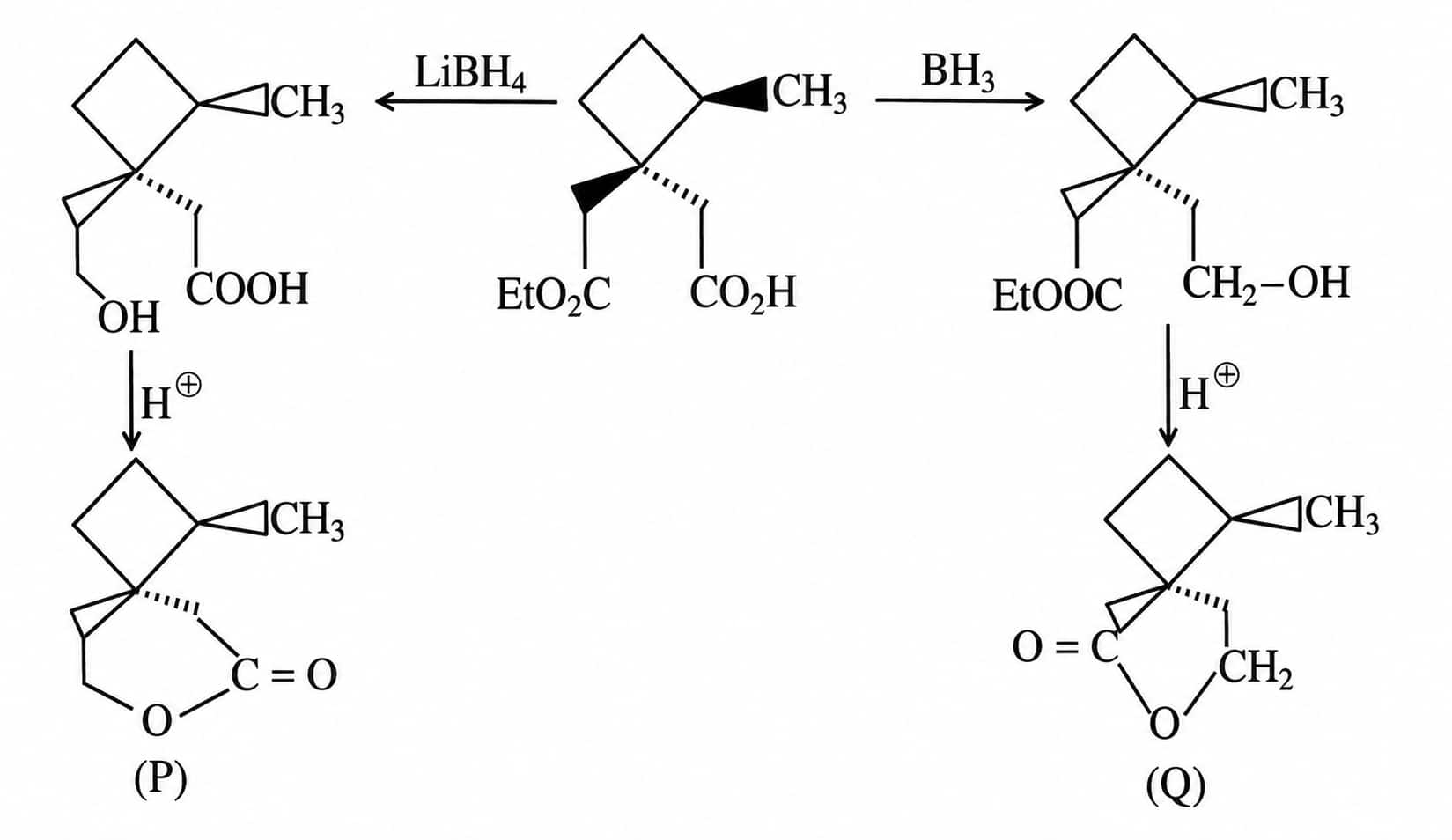
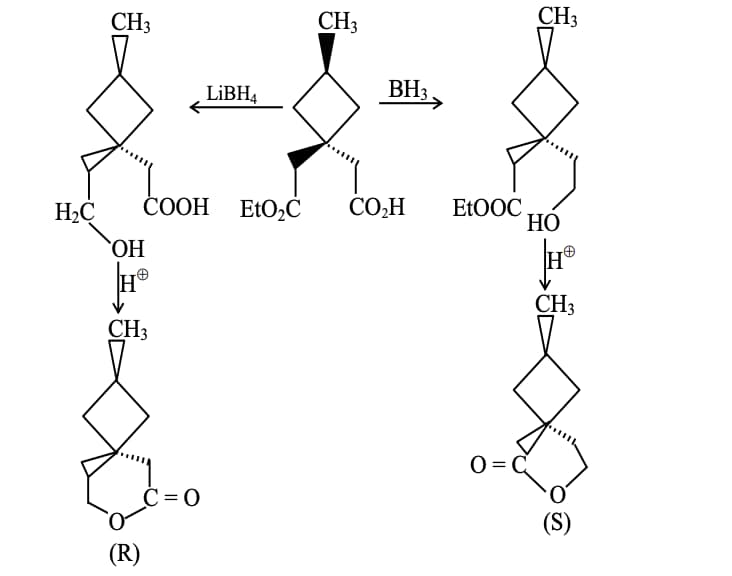
The problem requires students to understand the selective reduction of different functional groups rather than simply applying one reducing agent.
Students have to know that LiBH₄ reduces the ester, while BH₃ reduces the carboxylic acid.
The presence of multiple stereocentres and wedge-dash bonds makes the products difficult to compare.
Students have to carefully track the relative stereochemistry of the products P, Q, R and S.
A simple comparison of the functional groups is not enough; students must determine whether the products are identical or diastereomers.
The problem tests conceptual understanding of organic reactions and stereochemistry, making it a moderate-to-difficult-level JEE Advanced problem.
Most full-marks scorers, fewer wrong answers, and a low skip rate are the basis of the easiest questions. Based on these, the questions with the lowest difficulty index values were recorded for the following questions:
Rank | Question | Concept | Chapter Name | Difficulty Index | % Full Marks | % Wrong |
1 | Q14 | VSEPR shapes of listed species | 31.4 | 60.7% | 27.7% | |
2 | Q13 | ΔH/ΔS signs for processes | Thermodynamics | 44.7 | 44.8% | 30.8% |
3 | Q5 | 2s/2p orbital energies in H and Li | 49.3 | 3.8% | 28.8% | |
4 | Q8 | Kolbe electrolysis to phthalic anhydride sequence | Organic Chemistry | 51.5 | 3.4% | 11.8% |
5 | Q3 | Dipole moments of BF₃, NH₄⁺, NF₃ and NH₃ | Chemical Bonding and Molecular Structure | 52.7 | 35.0% | 56.2% |
The five questions with the lowest difficulty index in Paper 2 were:
Rank | Question | Concept | Chapter name | Difficulty Index | % Full Marks | % Wrong |
1 | Q7 | Periodic property statements | 38.6 | 42.1% | 38.9% | |
2 | Q2 | ONO bond angle order | Chemical Bonding and Molecular Structure | 45.8 | 43.7% | 40.4% |
3 | Q10 | Hydrogen-like species transitions, lowest a+b | Atomic Structure | 47.2 | 41.8% | 47.4% |
4 | Q6 | Xenon fluorides: P, Q, R | 54.1 | 7.2% | 19.8% | |
5 | Q9 | Sugars: invert sugar, Fehling, oxidation | 56.5 | 16.8% | 38.0% |
Q7 was the easiest Chemistry question in Paper 2, with a difficulty index of 38.6. It focused on periodic properties and had a very low non-attempt rate of just 4.9%.
Q2 on ONO bond-angle order and Q10 on hydrogen-like species transitions were also among the more approachable questions.
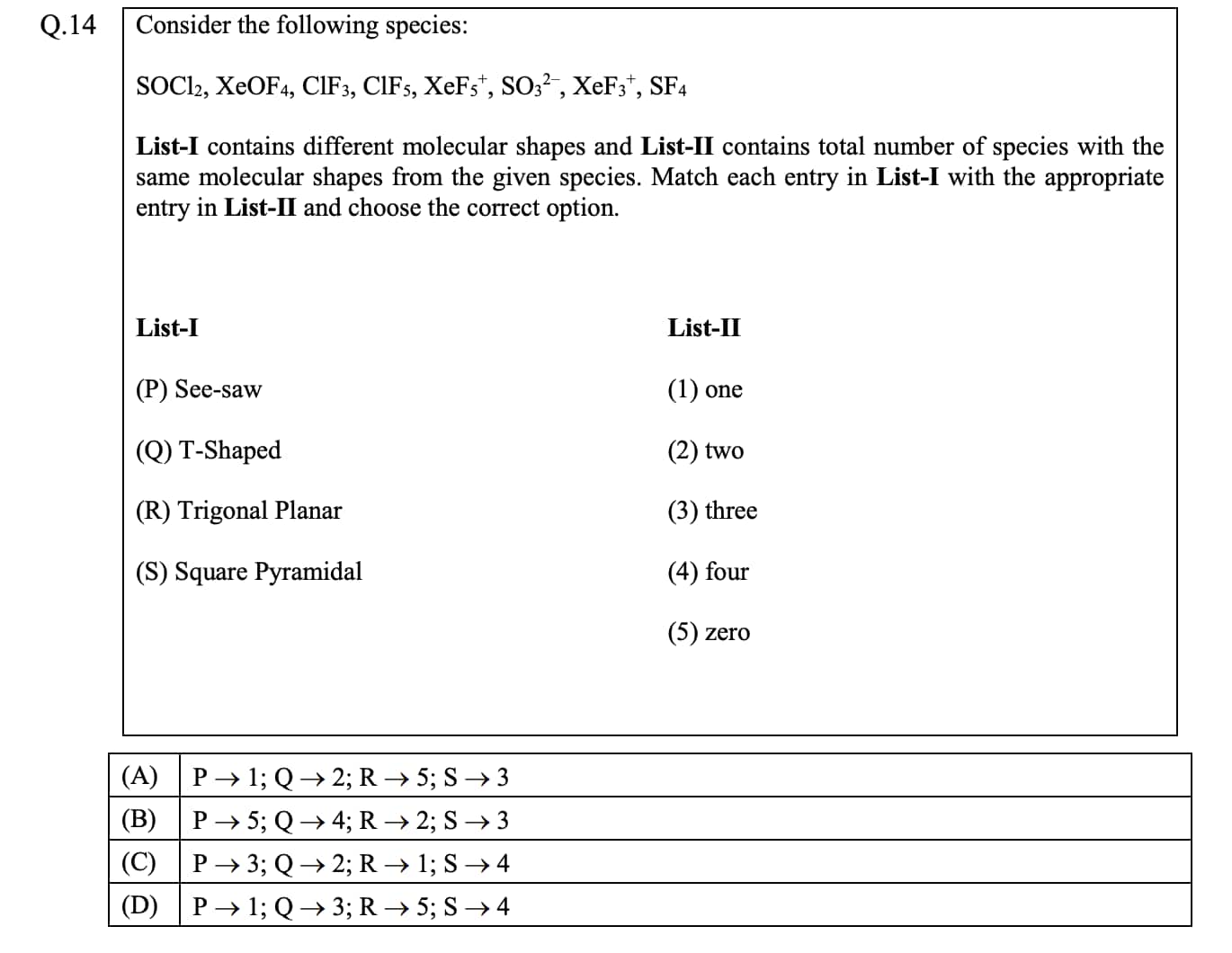
Solution:
Correct answer: option (A)
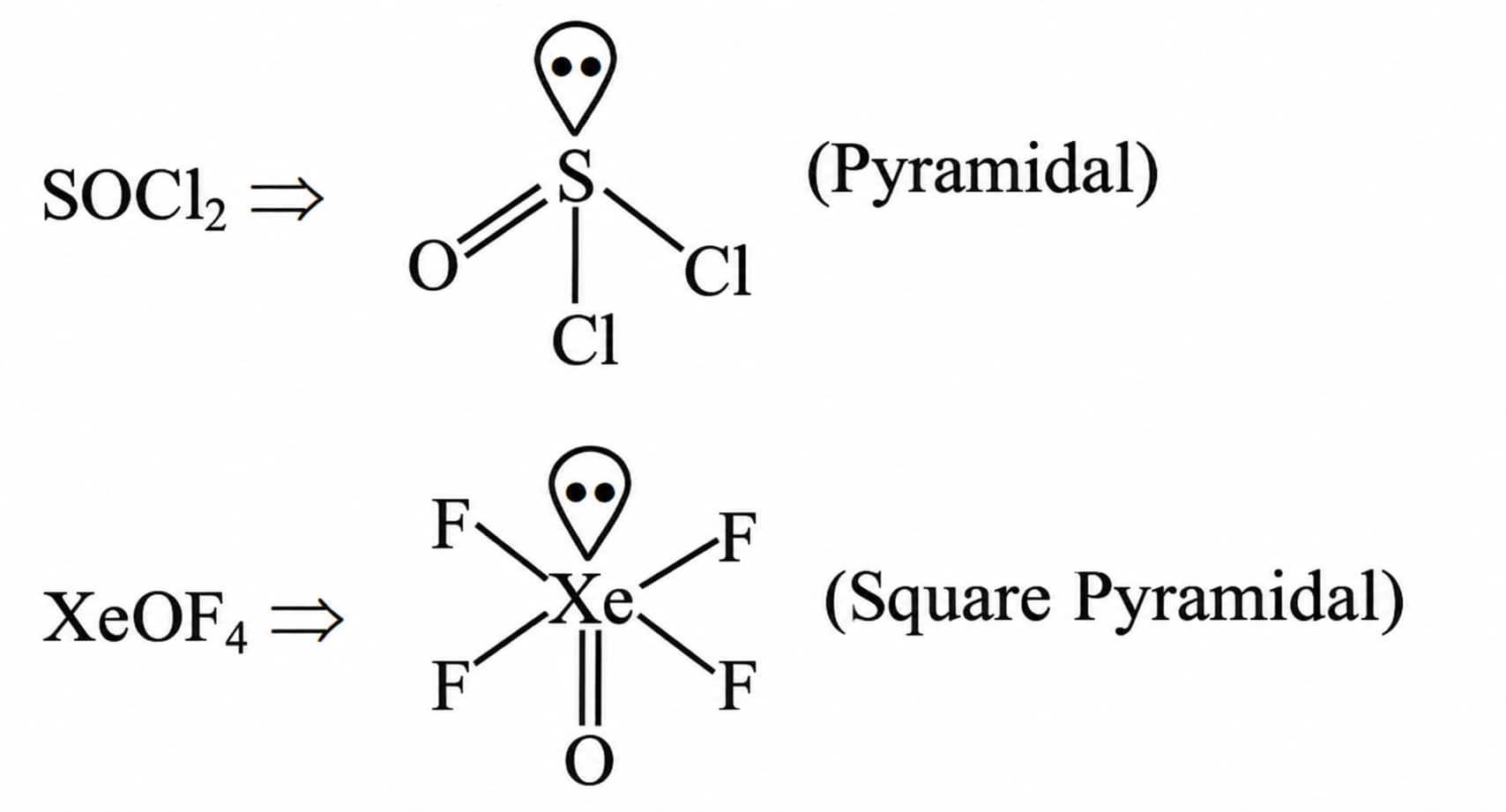
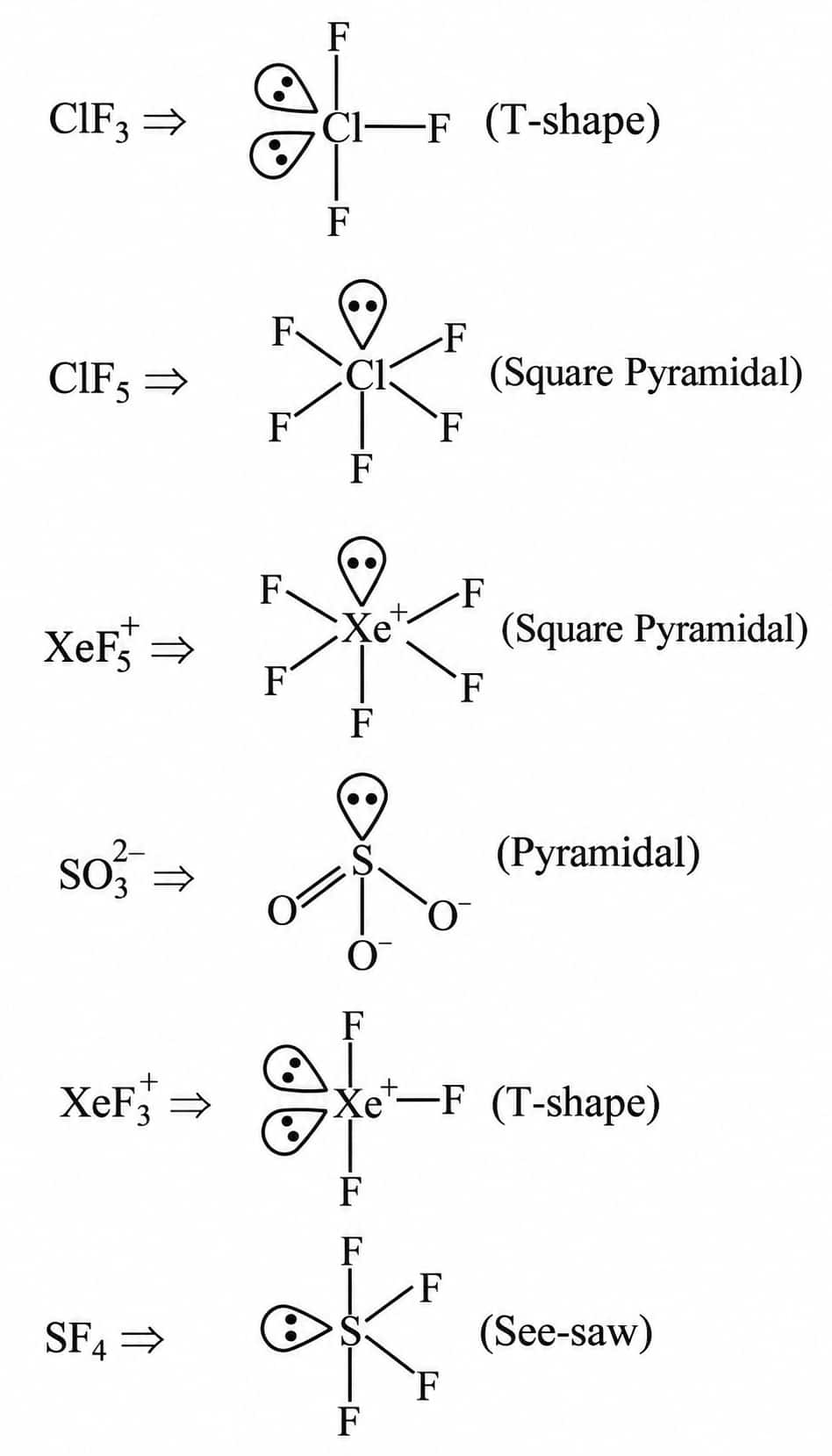
The question is easy because students have to identify the molecular shapes of the given species using VSEPR theory.
Most of the species have standard and well-known geometries, such as T-shaped, seesaw, and square pyramidal.
Students only need to count the number of species having each molecular shape.
Since the shapes can be identified quickly, it is a relatively easy JEE Advanced question.
Ranked #43 among Engineering colleges in India by NIRF | Get Upto 100% Scholarships
Scholars’ Round Deadline: 14th Nov’26 | Earn upto 50% merit Scholarship + 10% for top performers | EFMD Accredited | AACSB (USA) & AMDISA Member | Highest CTC 28 LPA
Difficulty and trickiness are not the same. Some questions may be attempted by many students but still produce a high percentage of wrong answers.
Rank | Question | Concept | Chapter Name | Trap Rate | % Wrong |
1 | Q10 | Isomers of square planar K[M(NCS)(NO₂)(gly)] | Coordination Compounds | 76.0% | 67.1% |
2 | Q12 | Collinear carbons after diyne alkylation | Hydrocarbons (alkynes), with Chemical Bonding (hybridisation and geometry) | 75.0% | 62.9% |
3 | Q11 | Carbonyl count after decarboxylation | Aldehydes, Ketones and Carboxylic Acids | 72.0% | 62.7% |
4 | Q9 | He/Ar mixtures in two cylinders | States of Matter (Gaseous State) | 62.0% | 49.7% |
5 | Q3 | Dipole moments: BF₃, NH₄⁺, NF₃ and NH₃ | Chemical Bonding and Molecular Structure | 61.6% | 56.2% |
Q10 was the biggest trap in Paper 1 Chemistry. Its trap rate was 76%, meaning a very large proportion of students who attempted the question failed to answer it correctly.
This highlights an important JEE Advanced trend: a question can look approachable but still be dangerous if students do not carefully check every condition and option.
Paper 2 had some exceptionally high trap rates. Q15 was the biggest trap of the entire Chemistry paper. Its trap rate of 99.2% means that almost every student who attempted it was caught by the question's difficulty or calculation requirements.
Rank | Question | Concept | Chapter Name | Trap Rate | % Wrong |
1 | Q15 | Molar volume ratio, vapour vs liquid B | States of Matter | 99.2% | 64.5% |
2 | Q14 | Copolymer mass from monomers X and Y | Polymers | 98.0% | 60.2% |
3 | Q12 | Boiling point elevation with dissociation | Solutions | 95.5% | 58.9% |
4 | Q17 | Kjeldahl nitrogen estimation: H₂SO₄ volume | 95.3% | 54.8% | |
5 | Q11 | Freundlich adsorption of acetic acid on charcoal | Surface Chemistry | 94.6% | 62.8% |

Solution:
Correct answer: 8
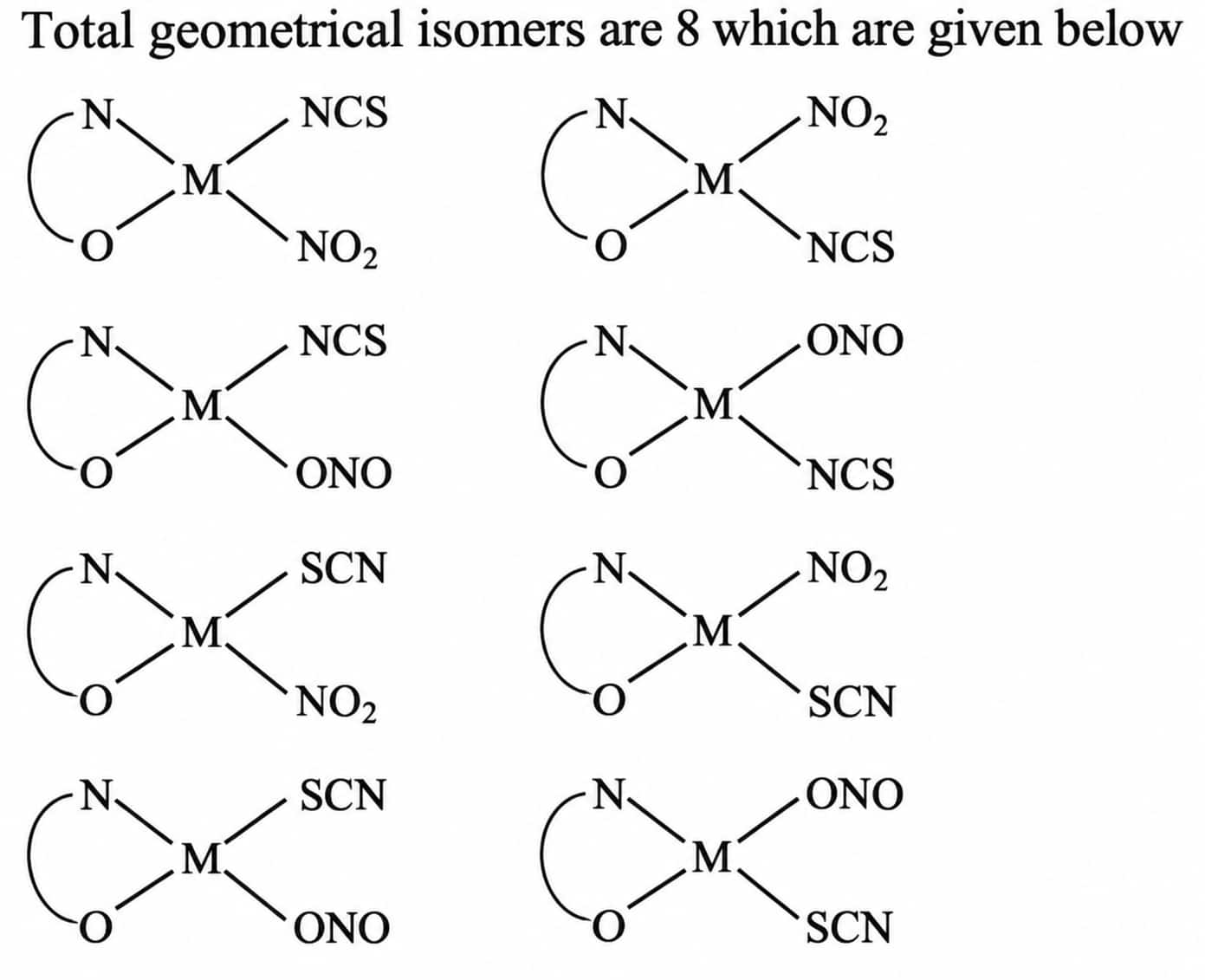
The question is tricky because it requires students to identify all possible isomers of a square planar complex with different types of ligands.
The bidentate glycine ligand (gly⁻) makes the arrangement more complicated than a simple square planar complex.
The problem tests conceptual understanding of coordination chemistry, ligand orientation, and isomer counting, making it a tricky JEE Advanced question.
Frequently Asked Questions (FAQs)
The Chemistry section of the JEE Advanced 2026 exam was considered the easiest and most scoring subject, compared to Physics and Mathematics, yet it had a balanced mix of direct NCERT concepts and some analytical problems.
Chemistry was easy and scored the most in JEE Advanced 2026.

On Question asked by student community
Check the list of the most important chapters for JEE advance from here:
https://engineering.careers360.com/articles/jee-advanced-syllabus-weightage
JEE Main and JEE Advanced are both national-level engineering entrance examinations, but they serve different purposes.
JEE Main is conducted for admission to NITs, IIITs and other participating engineering institutes. It is also the qualifying examination for appearing in JEE Advanced.
JEE Advanced is conducted for admission to the IITs
Start your JEE preparation from Class 11 itself by building strong concepts in Physics, Chemistry and Mathematics. Follow your Class 11 syllabus systematically and avoid studying only for board examinations.
A good approach is:
Complete each chapter conceptually and solve basic questions first.
Gradually move to JEE-level problems.
Practise previous-year
After qualifying JEE Advanced and getting an IIT, there is no single course that is best for everyone. Your choice should depend on interest, rank, career goals and the branch available to you.
Generally:
CSE/AI/Data Science – good for software, AI, data and technology careers.
Electrical Engineering – useful for
Hello Student, I can definitely help you create a balanced plan, but I would not recommend preparing JEE , NEET , KCET , MHT-CET and school exams as five completely separate syllabi. Your Class 11 NCERT/board concepts should become the common base, with JEE-level Maths/Physics and NEET-level Biology/Chemistry added according

Ranked #43 among Engineering colleges in India by NIRF | Get Upto 100% Scholarships
Scholars’ Round Deadline: 14th Nov’26 | Earn upto 50% merit Scholarship + 10% for top performers | EFMD Accredited | AACSB (USA) & AMDISA Member | Highest CTC 28 LPA
Application Free of Cost for Limited Time || NAAC A++ Accredited | Highest CTC 52 LPA | #11 in University Category by NIRF
AICTE Approved | Affiliated to AKTU | Grade "A" college of GGSIPU | Highest CTC 14.2 LPA
Affiliated to Anna University | Highest CTC 44 LPA | Top Recruiters : JP Morgan Chase & Co, Nielson IQ, QUBE, META, GOOGLE, AMAZON & many more.
B.Tech Application Open 2027 | Highest CTC 46 LPA | UGC Approved | 750+ Recruiters | 100% Placement